I think I wrote a first draft of this in high school...maybe. It was published in the university newspaper in my first or second year. I am VERY political, but I couldn't tell you what about.
----------
If a tree falls in the forest and nobody is there to hear it, does it
make a sound? Does it really matter if it makes a sound? Does anyone
care? After all, it's only a tree, a tree that produces oxygen for
us to breathe, a tree that gives us shade from the fiery heat of the
sun, even cools the air. Are there not other trees to do these
things? Wasn't nature just taking its course and removing an old
tree? Yes, of course it was, but what if a man had cut the tree down,
cut it down to use for lumber after it had supplied its share of
oxygen and shade for many years? Isn't he just continuing its use for
the better? Not according to some, the kinds of people who would
rather lie in the middle of the road, risking life and limb, than let
a lumberjack continue a tree's usefulness.
So a tree falls naturally and no one cares. Except for the squirrel who
has just lost a sleeping place, and also happened to be sitting under
the tree at the time of the accident. He'd care, but only for a
second, for the brief moment before life was forced from him as a
whoosh of air, and a tangled mass of limbs fell around and on top of
him. CRUNCH! Would anyone hear that sound, a sound far
smaller than the possible din of the tree?
That's a good point. If a squirrel gets crushed in the forest will it make a
sound? Will anyone notice? Will anyone really care? A squirrel's just
a squirrel, nothing important like a tree, a tree that has just
committed murder by crushing the squirrel. Yes, full-blown,
cold-blooded murder of the very creature whose ancestors could have
carried the seed to plant the tree. This tree has killed, and yet
people flock to save the remaining forest. What's to stop those trees
from killing other innocent squirrels? Nothing, that's what. And yet
people don't understand; they don't see the maliciousness of trees as
they seek to destroy squirrels and other woodland creatures. The good
lumberjacks try to put the trees towards a useful purpose before they
have a chance to kill, but too often their paths are blocked by dazed
tree-huggers.
So, if a tree falls in the forest, and it hits a fanatical, tree-hugging,
lunatic will it make a sound? Probably. Will the other wild-eyed and
obviously confused environmentalists hear it and realize the trees
have turned on them? Probably not. Will they see their misguided ways
and change before it's too late, or will they ignore their comrade's
end and continue to save this enemy of squirrel and man alike? Who
knows? Only time, will tell.
Now about baby seals...
3.18.2015


3.16.2015
atlas collection
"Let me have a look at your car."
What does this man want to see my car for.
"I don't have a car."
"How about your office, would that be all right?"
My office? I don't have an office. There is a desk in my bedroom.
"I don't have an office"
"Where do you work then?"
"Well there's a desk in my bedroom."
"Okay, we can start with that."
"I'd rather, oh! It's a bit messy with paper and things all over. And the walls, I haven't hung everything yet. You're going up the stairs. I don't really want you to, oh shit."
The man mounts the stairs to the attic bedroom, rounds the corner at the top and stops. Atlases. They are wedged around the room, against the wall behind the furniture and amongst other atlases, the ceiling and the floor. The earth pressed flat and repeated into an over-literal meditation on parallel worlds."Planning a trip?"
James catches up, too out of breath for the number of stairs he just climbed. "No, just atlases."
"But why so many?"
James manoeuvres into the room, past the man, until he stands between him and the books. With the worlds at his back he stands tensed and ready and forgets to breathe until his face glows red. "No reason. There was a sale at the Salvation Army. You don't need a reason to buy atlases."
"And if you had to move, would you get rid of some?"
James looks behind him and considers the atlases, his desk and unmade bed, just a mattress on a boxspring on the floor, and the pieces of paper on everything. He turns to answer, but the man is gone. On the wall near where he was standing James notices a photograph of a cow he took while in France. He couldn't remember hanging it.
"I don't have a car."
"How about your office, would that be all right?"
My office? I don't have an office. There is a desk in my bedroom.
"I don't have an office"
"Where do you work then?"
"Well there's a desk in my bedroom."
"Okay, we can start with that."
"I'd rather, oh! It's a bit messy with paper and things all over. And the walls, I haven't hung everything yet. You're going up the stairs. I don't really want you to, oh shit."
The man mounts the stairs to the attic bedroom, rounds the corner at the top and stops. Atlases. They are wedged around the room, against the wall behind the furniture and amongst other atlases, the ceiling and the floor. The earth pressed flat and repeated into an over-literal meditation on parallel worlds."Planning a trip?"
James catches up, too out of breath for the number of stairs he just climbed. "No, just atlases."
"But why so many?"
James manoeuvres into the room, past the man, until he stands between him and the books. With the worlds at his back he stands tensed and ready and forgets to breathe until his face glows red. "No reason. There was a sale at the Salvation Army. You don't need a reason to buy atlases."
"And if you had to move, would you get rid of some?"
James looks behind him and considers the atlases, his desk and unmade bed, just a mattress on a boxspring on the floor, and the pieces of paper on everything. He turns to answer, but the man is gone. On the wall near where he was standing James notices a photograph of a cow he took while in France. He couldn't remember hanging it.
3.15.2015
spring coffee
I'm cleaning out the folder I created while taking a creative writing class a few years ago. This story is probably the most bummer one I've found so far.
-----
-----
Cratered
by disbelieving feet, the slush lay across and around the ice rink,
amazing what a difference a few degrees make. Only the day before, in
golden winter light, blades had slashed across the rink’s solid
surface, hard and fast in the cold, sounding clean, people’s breath
clouding their faces for an instant before disappearing. Today
though, all the breath had reappeared as numbing mist, flattening the
day's light and sound. Heavier drizzle, not quite rain, falling
through the grey air adding static, like somewhere someone had left a
very large set of headphones slightly unplugged.
One of the
local cool kids, John or DJ SoundSauce depending on context, slunk
past the rink. His feet were soaked, his shoes, salt-stained and
deformed by the season, were of no use as every step brought a
puddle. He pulled himself deeper into his pressed wool pea coat but
damp air knows secret passages through a jacket and he shivered as he
squelched on. John held fire in his hands, but only enough to singe
his lungs without warmth and add fresh smoke to his acrid jacket. All
night spent in dank underground windowless clubs, cinder block walls
holding out smoking laws, where people danced in the face of sleep as
John spun and spun through an unknown dawn’s sad light, his being
stank and his skin held the grey translucence of the world around
him.
The
damp air made hard things unreal. A car burst past without warning.
Blasting its horn. Splashing through a puddle its red metal a sudden
scarring contrast to the day. Cursing the driver, John stood
bedraggled and dripping in front of the coffee shop, 9 am and it was
closed. According to a note on the door it had never opened that
morning due to a family emergency. Sorry,
in the red ink of a Sharpie alongside a bright smiley face. John felt
mocked by the grin as he shivered on the sidewalk considering sleep,
Adderall and whether delirium tremens was only an alcohol thing or if
caffeine was incriminated in some way. Looking down, someone had
found coffee that morning. An empty white paper cup tossed away and
floating in the dirty morass, a thin brown stain at the bottom
holding none of the flavour and aroma John craved.
12.01.2014
balls in tubes
The children were taken into a grey room and told to sit at a round, grey table. The table was low and had small, child-sized chairs around it. From the table's centre rose a clear plastic cylinder, inaccessible and full of colourful balls: reds, greens, oranges, blues and yellows. It was so tall that even if a child had climbed onto the table and stretched out on tippy-toe they wouldn't have reached the top. One by one the children's mothers were taken out of the room by doctors, and without paper or crayons the children were left to their thoughts about plastic balls, life, death and the inevitable collapse of empires.


9.23.2014
Tanya Tagaq and the Polaris Prize
A woman growled at me last night
gnashed and stomped and thrashed
and left my skin buzzing
all my hair alive
my heart in my throat
and when she was done I cried.
I don't know why or what for
but I felt it building while she sang
and secretly craved the release.
If I felt like lying to sound noble, I would say it was the names that did it.
Of the missing and murdered
aboriginal women
that streamed
that streamed
endlessly
behind her.
But I don't.
There isn't
a reason,
a thing,
my brain can attach to
to analyze.
I just cried
because of art and beauty
and a human embodying herself
and knowing where she's from
knowing knowledge of a different kind
knowing knowledge of a different kind
and being fully realized
and,
well,
well,
growl the fuck on.
-----
Depending on how you want to divide a life, most of my childhood was spent in a big brick farmhouse outside Keady, Ontario; a 30 minute drive from Owen Sound. We had a barn and 200 acres and three ponds. The house also had a single story addition off one side. Maybe built as a granny flat or for the itinerant farm labour of an older era, we used it for laundry, an extra washroom and a spare bedroom.
I spent a lot of time in that bedroom, because it's where the computer was and the computer was my therapist. Not that I knew it at the time. At the time I would walk through the enclosed but unheated cement porch that connected the flat to the house, get what warmth I could from the electric baseboard heaters and boot up Minesweeper, a game where you use numbers as clues to flag hidden mines and avoid detonation. I would lose hours trying to beat previous best times at beginner and intermediate, or just try to finish at all on the expert setting.
It wasn't a real challenge though, best times were about lucky first clicks and a well set-up random board. Instead it was just about being soothed by mindless repetition. Click click click. The game was so in the moment and instantaneous that I didn't need to think about anything else. I had a goal and I had to stay focused or I would never find the 10 mines on the beginner setting in under 8 seconds. That my dad and brother moved to BC didn't matter. That the family's plan to follow was cancelled because my parents were divorcing didn't matter. That we were selling the farm and some of us were moving into Owen Sound didn't matter. That we had to give away Tara, the family dog, because city life would be absolute shit for one of the best groundhog hunters in the world didn't matter. No sadness, just focused clicking.
My feet and hands got cold in that room. I used to think I had poor circulation, and maybe I do, but I was also just sitting in a cold room away from my family at the far end of my house, only moving one finger for hours on end.
The computer wasn't just about Minesweeper, though. There were moments in my childhood when I felt our family was at the cutting edge of technology, like when we got a new computer featuring a CD ROM drive. I was 11 or thereabouts and I remember being asked out of science class at school by the librarian once to help fix one of the school's new computers. Just having a CD ROM at home imbued me with preternatural knowledge about futuretech that the adult desperately needed. I was unable to help.
Of course if you have a drive, you need some discs and amongst the two or three we had there was Encarta, Microsoft's attempt to capture the world's knowledge in one digitized encyclopaedia. When you put Encarta in the drive and closed the tray it would buzz to life and its opening screen would appear, a collage of famous images and people laid together, their borders fuzzed and melded. A few moments later an audio montage would begin, tinny and thin from the computer's speakers. I have a dream would melt into Beethoven and some drums before Inuit throat singing bled out from the ether.
I knew what it was and I knew I didn't like it. The singing scared the shit out of me and made the cold porch between me and my home yawn longer, darker and colder. Two women from far away in space and time in a sweaty fire-lit place faced one another and made these noises while an endless night full of endless white and endless dark howled outside their igloo. A child's imagination mashed with snippets of The Twilight Zone, forced to confront humanity in a raw form, humans connecting with humans unmediated. I had removed myself to this bedroom so the messy stuff, the complex interplay between people that can't be planned out ahead of time, but only experienced and responded to in real time, couldn't force itself upon me.
Although, at the time, I didn't think all that. I just thought it was creepy.
-----
I was in Montreal a few years ago, and, dating a gardener at the time, Montreal Botanical Garden was on the itinerary. Maybe it was because of all the plants, maybe it was because I was uncomfortable in the relationship and hadn't recognized it yet, but at some point during the day I smoked too much and became very tired. Lounging on the benches while my girlfriend pilfered tobacco seeds - shhh - eventually got to be too much on a sunny day so I needed to find some shade.
The First Nations Garden is one of many sub areas in the larger complex and it is well shaded with lots of trees and has a cool, literally and figuratively, interpretation centre too. Fortunately for me and my life that was, unbeknownst to me, leading to today when I would write this blog post, there were some Inuit throat singers performing.
It was warm, there were people all around and I had nothing to fear! Also, that I was looking at the source of the singing, the singers themselves, inevitably humanized the moment. Child-me understood Inuit throat singing vaguely, as part of a hodgepodge of aboriginal spiritual beliefs. Whatever the specific practices of the different nations and peoples they were all just communing with dead ancestors and the spirit world because that's what they had always done. As I said before, sweaty faces in a fire-lit lodge, full of who knows what sinister and mysterious meaning. Whether I thought it consciously or not, my imagination led me into mental traps that understood throat singing as part of culture frozen and dead in the past, romantically removing its agency, preventing it from having any valid role to play in the present and future.
That day in Montreal, however, I could see that throat singing, like so many other kinds of performance and art, wasn't just about lost relics or ancient traditions, but about connecting with who was in front of you. Experiencing the now with whoever is there to share it. The women faced each other, holding one another's arms (although that part of the memory is a bit hazy, so apologies if that is an impossibility) and they started to sing. Back and forth, modulating and experimenting with noises and sounds, and improvising. They were coming up with stuff on the spot, playing off what they heard from the person they were facing and eventually, I realized, trying with all their might to get the other person to crack up, break the song and break out laughing. It was a moment of pure joy under the leafy green trees on a hot and sunny early September day.
------
A moment's research on Wikipedia tells me Inuit throat singing is generally a duet, or a performed contest between women. And, Tanya Tagaq, as a solo performer, is singled out as a non-traditional use of the form. And I'm willing to bet, incorporating a 40 person choir, drums and and electrified violin for a performance in a space originally built by the Eaton family as a restaurant in a fancy department store might also be considered "non-traditional", but fuck it all if that isn't the brilliance of life.
Ever-changing and inevitably moving forward, moment to moment, until we're all done.
--------
3.08.2014
A car commercial
A man in the backyard of his modernist house, shorts and shirt, relaxed of a sort. Everything is rectangles and moulded concrete, the blue of the pool set off by neatly shorn grass and surrounded by a tall hedge. He appears strong, muscled, thick and broad, surveying his property and wonders, Why do we work so hard? For stuff? He talks of Europeans taking August off, August!, stopping for a leisurely café after work, enjoying life. But not America. America is hustle, and so the man moves bravely, resolutely, with solid strides.
Inside the house, more rectangles, grey, wood, space, opulence made to look like a factory perhaps. America is high-fiving your child who sits on the couch with a tablet with a sibling beside her entranced by paper of all things. America doesn't need cafés or August, just more hard work. The rest of the world is free to judge, because those idiots hate stuff and none of them were the Wright brothers, Bill Gates, Les Paul or Ali.
We're in the kitchen now, rectangles, and there's the wife with a hand off, it's a go-go household after all, and the moon. It's our moon, America's moon.
The man changes into a suit and is at his car, it's a Cadillac, it's electric and it's a just reward for hard work. "Work hard, create your own luck and you gotta believe anything is possible," except taking August off. If you think that's possible you're a fool, and probably foreign. "As for all the stuff, that's the upside of only taking two weeks off in August, n'est pas?" WINK.
The commercial is a wonder, usurping decades of anti-consumerist rhetoric and revelling in it. Stuff for the sake of stuff, owning for the sake of ownership, and being able to one up the Joneses without the slightest hint of self-consciousness. Define yourself through possession and keep striving because enough is just a rest, a chance to gather strength before launching to the next enough. Oh, and it's downright unAmerican to think otherwise.
And the ad is for an electric car of all things!
People like to buy stuff, it's undeniably fun. There are colours and smells and a sense of satisfaction, not to mention the incredibly powerful self-narratives that can grow around the regular use of the most inane household item. Try to write off consumption and you risk looking like a judgemental wiener and wrong, because the last few centuries seem to suggest it has staying power. But consumption can be depressing too, like when you're told about the environmental or social damage our desire to buy the latest cellphone might be causing. Or the unsatisfying and empty existence you find for yourself once you've climbed aboard the status treadmill (apparently it's also called the hedonic treadmill, but calling it that sounds like you were so busy not buying stuff you had to read the dictionary to fill your time).
On all fronts this commercial just says, yeah, I've heard about hedonism, isn't it great? Want to come over later? We're going to make fun of Europeans, murder August and burn it on a pyre of the stuff we don't want anymore.
That's what it says!!!
This is the point in the writing where I've said some things, really just summarized a commercial and added the bare minimum of commentary, and although I want to write more I'm going to walk away ... in just a few paragraphs, right after I make an ass (maybe?) of myself trying to extrapolate. Here goes:
The car commercials I'm used to tend to have a car driving down a pretty road, maybe there's some cool music. If there's an underlying message it's that this truck makes you a man, or fuel efficiency makes you green. Instead this ad feels like it's defending a way of life.
It's saying, remember World War II? Which we won. And the Cold War? Which we also won. Out loud it's saying, the Wright brothers, Bill Gates, Les Paul, Ali and the moon, but we know what it's really saying. The commercial is also saying, we won the wars by living the right way, working hard and buying stuff. That's how we did it then and that's how we're going to keep doing it, because we're the best! The commercial doesn't want you to stress about economic shifts, the environment, monetized politics or collapsing international relations. It wants to distract from an uncertain future by looking back and reminding people that it's all good. What we're doing is fine, don't ask.
I'm not saying all those bad things are as bad as the most ardent evangelists claim; even attempting to argue that would take at least 6 blogs. And as a person who likes the odd piece of stuff, I probably just wear the same cardigan for longer than most, I don't want to come across as judgemental. Heck, I even like the commercial and have watched it a bunch. I'm just saying, that's what it's saying.
I saw the commercial while I was visiting LA, a weird place full of delusion and cars. Everyone is going to be famous and they all just need to drive across town to an audition all the time to make that happen. To do that day after day requires the kind of gung-ho, I'm-the-best attitude this commercial exudes, and it also requires a place that won't be crushingly depressing when the dream doesn't work out on the first couple hundred days. LA might be the ultimate post-modern city, where every day is like the one before and every place is no place, and it's also a pretty great city, in part because of its weather. The light and the ocean/desert air makes everything you do in a day feel indulgent yet productive. My first three days there I napped at least an hour every afternoon and I've never felt so accomplished.
This commercial is like how LA's weather lets you deal with what might actually be a pretty pointless life. It's easy and it feels good and lets you think everything is going to work out fine. You just need to keep doing what you've been doing, working hard and taking two weeks off in August. Remember, you're the best. Sure it might be the start of a century long mega-drought, but you've been living beyond your aquatic means since forever, so who cares. The sun is shining, the surfing looks good and more stuff.
Fuck August.
Inside the house, more rectangles, grey, wood, space, opulence made to look like a factory perhaps. America is high-fiving your child who sits on the couch with a tablet with a sibling beside her entranced by paper of all things. America doesn't need cafés or August, just more hard work. The rest of the world is free to judge, because those idiots hate stuff and none of them were the Wright brothers, Bill Gates, Les Paul or Ali.
We're in the kitchen now, rectangles, and there's the wife with a hand off, it's a go-go household after all, and the moon. It's our moon, America's moon.
The man changes into a suit and is at his car, it's a Cadillac, it's electric and it's a just reward for hard work. "Work hard, create your own luck and you gotta believe anything is possible," except taking August off. If you think that's possible you're a fool, and probably foreign. "As for all the stuff, that's the upside of only taking two weeks off in August, n'est pas?" WINK.
And the ad is for an electric car of all things!
People like to buy stuff, it's undeniably fun. There are colours and smells and a sense of satisfaction, not to mention the incredibly powerful self-narratives that can grow around the regular use of the most inane household item. Try to write off consumption and you risk looking like a judgemental wiener and wrong, because the last few centuries seem to suggest it has staying power. But consumption can be depressing too, like when you're told about the environmental or social damage our desire to buy the latest cellphone might be causing. Or the unsatisfying and empty existence you find for yourself once you've climbed aboard the status treadmill (apparently it's also called the hedonic treadmill, but calling it that sounds like you were so busy not buying stuff you had to read the dictionary to fill your time).
On all fronts this commercial just says, yeah, I've heard about hedonism, isn't it great? Want to come over later? We're going to make fun of Europeans, murder August and burn it on a pyre of the stuff we don't want anymore.
That's what it says!!!
This is the point in the writing where I've said some things, really just summarized a commercial and added the bare minimum of commentary, and although I want to write more I'm going to walk away ... in just a few paragraphs, right after I make an ass (maybe?) of myself trying to extrapolate. Here goes:
The car commercials I'm used to tend to have a car driving down a pretty road, maybe there's some cool music. If there's an underlying message it's that this truck makes you a man, or fuel efficiency makes you green. Instead this ad feels like it's defending a way of life.
It's saying, remember World War II? Which we won. And the Cold War? Which we also won. Out loud it's saying, the Wright brothers, Bill Gates, Les Paul, Ali and the moon, but we know what it's really saying. The commercial is also saying, we won the wars by living the right way, working hard and buying stuff. That's how we did it then and that's how we're going to keep doing it, because we're the best! The commercial doesn't want you to stress about economic shifts, the environment, monetized politics or collapsing international relations. It wants to distract from an uncertain future by looking back and reminding people that it's all good. What we're doing is fine, don't ask.
I'm not saying all those bad things are as bad as the most ardent evangelists claim; even attempting to argue that would take at least 6 blogs. And as a person who likes the odd piece of stuff, I probably just wear the same cardigan for longer than most, I don't want to come across as judgemental. Heck, I even like the commercial and have watched it a bunch. I'm just saying, that's what it's saying.
I saw the commercial while I was visiting LA, a weird place full of delusion and cars. Everyone is going to be famous and they all just need to drive across town to an audition all the time to make that happen. To do that day after day requires the kind of gung-ho, I'm-the-best attitude this commercial exudes, and it also requires a place that won't be crushingly depressing when the dream doesn't work out on the first couple hundred days. LA might be the ultimate post-modern city, where every day is like the one before and every place is no place, and it's also a pretty great city, in part because of its weather. The light and the ocean/desert air makes everything you do in a day feel indulgent yet productive. My first three days there I napped at least an hour every afternoon and I've never felt so accomplished.
This commercial is like how LA's weather lets you deal with what might actually be a pretty pointless life. It's easy and it feels good and lets you think everything is going to work out fine. You just need to keep doing what you've been doing, working hard and taking two weeks off in August. Remember, you're the best. Sure it might be the start of a century long mega-drought, but you've been living beyond your aquatic means since forever, so who cares. The sun is shining, the surfing looks good and more stuff.
Fuck August.
2.03.2014
I Bought You Russia
We shot this thing in October 2012. Do you remember October 2012? It was a long time ago. But the movie is finally done and now on the internet.
Just in time for Sochi!
12.16.2013
Gayl Pile
Remember event television? Like when Stephen King's The Stand was a mini-series and they promoted the unholy hell out of that sucker?
Well Gayl Pile promises to be better.
Note: I am not prone to hyperbole. Nor do I remember what The Stand was actually like.
Well Gayl Pile promises to be better.
Note: I am not prone to hyperbole. Nor do I remember what The Stand was actually like.
11.07.2013
Tony Ho - Wanda
So in the midst of all this Rob Ford stuff Tony Ho released a new video.
That's good news, because everyone needs uplifting comedy at a time like this.
Warning, SWEARS!
That's good news, because everyone needs uplifting comedy at a time like this.
Warning, SWEARS!
5.18.2013
Tony Ho - Time
If you haven't heard of Tony Ho, the haunted house of Toronto comedy, what better place to start than with their new amazing short!?!?
I like to let the work speak for itself, enjoy!
I like to let the work speak for itself, enjoy!
Why I feel bad for Rob Ford
I am not a Rob Ford apologist. Rob Ford is a bad mayor, and based on a bunch of evidence he seems to be a bad person. The man lacks empathy, can't comprehend that other people with distinct perspectives exist, refuses to accept any proof from outside his intuition, and even uses his self-avowed ignorance as a point of honour. There are the proven drunken rages in public, accusations of a bigger drinking problem, possible familial abuse and sexual harassment and now the crack video. Some of Rob Ford's problems are public knowledge, others just strongly suspected, but taken together they build one hell of a pattern. (And just for the record I believe some of the stories more than others, but I do believe the crack video exists and the descriptions now in the public domain to be largely accurate.)
Given all that though, and given that I disagree with many of his policies and despise the hypocrisy and willful ignorance and lies he uses to support them, I still feel bad for Rob Ford. Let me try to explain why.
I feel bad because Rob Ford is not a happy man. And he is not a happy man because he is not doing a thing he wants to be doing. I see Rob Ford as an emotional (as opposed to intellectual) being whose world is more black and white than shades of grey. I'm right, you're wrong and even if there are aspects of your position similar to mine, you're still wrong. When he experiences something his response is immediate and single-minded. He doesn't consider contributing factors or how things will be received, he just responds directly and emotionally. If you don't agree full bore, you are attacking him and you are now an enemy. Rob Ford's response is to roar in anger and pain at perceived transgressions and that means he is not suited to being mayor, a job where basic understanding, negotiation and compromise are necessities.
The mayor's emotional reality only became apparent to me on a rare instance when he was in the public eye and obviously happy. At the opening of the new Underpass Park last summer - built beneath an elevated highway by Waterfront Toronto - children were clambering like ants over a newly built jungle gym, having a time as kids are wont to do, when the structure starts bouncing slightly and the camera person suddenly moves to get a better angle. And there he is. Rob Ford has climbed the jungle gym and is now bouncing it and the children. And the children are chanting - Go mayor! Go mayor! - and the man beams. Rob Ford is having the best time, he is happy and it shows and it's kinda nice.
This isn't the original video I saw, but you'll get a feel for what I'm on about, AND get to witness some fantastic audio recording if you watch the whole thing.
But Rob Ford doesn't get to play in the park with children everyday, and Rob doesn't get to perpetually meet with constituents one-on-one to help solve small problems, something I think the man was probably good at. Instead he is mayor and as such needs to subject himself to the chaos of governing, directing city council and working with everyone to find a way forward for the city, something he has repeatedly proven himself incapable of.
What Rob Ford does like doing, and he seems to be quite good at, is coaching football. Unlike at city hall, on the football field he can be as gruff and boisterous as he likes. He's the boss and the players have to do what he says because that's the way it is. He even knows and feels comfortable with the rules, something I'm sure gives him peace of mind. (I'm intentionally leaving this aside for the moment: "By associating himself with crack dealers, a mayor who cast himself as a surrogate football-coach father to black youth who, he claimed, would otherwise have been involved in drugs and gangs, would turn out to be a direct benefactor of the crippling problem he said he was shielding them from. Toronto has seen some cynicism in its days. This is toxic.")
I bring this up because I'm not the only one who thinks it. The reporters who have seen the crack-video report a man off screen telling the mayor his true calling lies in coaching football, and the mayor agrees. So why isn't he doing it? He's from a wealthy family; why doesn't he just coach football and run his foundation full-time?
The answer might be hinted at in another part of the video where Rob Ford is mumbling again... Everyone expects me to be right-wing, I'm... and he trails off. It would be great to know what or who Rob Ford thinks he is, but what we do know is he feels the weight of expectation on him. I assume the expectation and its attendant pressures are mainly familial, but that's obviously me guessing. I've only heard rumours of motherly and brotherly force brought to bear; you have to do this Rob, because of the family name, because of dad, because of history.
Whether from his direct family or the wider conservative one, Rob Ford feels the pressure, and I would guess he feels trapped. When you feel trapped you want to escape and that brings us back to crack and the rest of it. As variously reported and rumoured he drinks to excess, abuses prescription meds and now apparently barrels around high on crack all while his mayoral work suffers, and as an inevitable result the city suffers. Rob Ford is now so desperate to escape his life, job and the expectations that lurk over him he has to hide out in a crack den bantering with men - we don't know what the mayor considers them, strangers or friends - whose motives are clearly not aligned with his own, and it's sad.
Rob Ford's story is a big one, painted in the largest brush strokes of a Greek play, it's all pathos and tragedy, each turn another level of despair. But even the nuance of the tale is incredible. I mean, it had to be crack, it had to be THE drug of urban decay, the default drug we go to as an explanation - assume someone is on - when their decisions make absolutely no sense. Given all that, and the things the mayor has done and wants to do to the city, the things he has said to and about people, horrible things, it's easy to forget the mayor is still a person, not just a caricatured monster, no matter how much we dislike him. And when a person is caught in a story where the Greek gods are pulling the strings, the mortal had best be careful.
He's an unhappy man doing a job that at this point I can't believe he wants to be doing. More than that though, the stress Rob Ford is under might end up doing him some serious long-term, physical harm.
Rob Ford does not look well. Look at most pictures you can find of him online from the past few months, or even just this picture from a flag raising at city hall on Friday.

It's ridiculous and hilarious. It looks exactly like what we expect a picture of Rob Ford to be. He looks like a buffoon, both literally and figuratively a man apart from the crowd. We get to laugh because he is not like us, he is bad and petty and mean, and we rejoice that we are not those things. But Rob Ford also looks sick, so unhealthy, disheveled and on the verge of something disastrous.
As I've said already, I'm not a Rob Ford apologist. Even if I think he's in a situation not of his own choosing - and infantilize him somewhat by saying his mother and brother make decisions for him - it doesn't mean we should forgive his being such a shitty mayor. He is an adult who has to take responsibility for the awful job he is doing. In a few weeks Rob Ford will be turning 44, and I think it would be great if by that time he had found other work. He distracts from governing, gives up on projects the moment they aren't going his way and affixes a bizarre stigma to Toronto internationally as his pratfalls become the only thing people from away know about our city. Rob Ford is not good at his job but I still feel bad for him because beyond what I consider his professional failings the man is suffering. I just hope those around him recognize the demons and help him before anything worse occurs.
Given all that though, and given that I disagree with many of his policies and despise the hypocrisy and willful ignorance and lies he uses to support them, I still feel bad for Rob Ford. Let me try to explain why.
I feel bad because Rob Ford is not a happy man. And he is not a happy man because he is not doing a thing he wants to be doing. I see Rob Ford as an emotional (as opposed to intellectual) being whose world is more black and white than shades of grey. I'm right, you're wrong and even if there are aspects of your position similar to mine, you're still wrong. When he experiences something his response is immediate and single-minded. He doesn't consider contributing factors or how things will be received, he just responds directly and emotionally. If you don't agree full bore, you are attacking him and you are now an enemy. Rob Ford's response is to roar in anger and pain at perceived transgressions and that means he is not suited to being mayor, a job where basic understanding, negotiation and compromise are necessities.
The mayor's emotional reality only became apparent to me on a rare instance when he was in the public eye and obviously happy. At the opening of the new Underpass Park last summer - built beneath an elevated highway by Waterfront Toronto - children were clambering like ants over a newly built jungle gym, having a time as kids are wont to do, when the structure starts bouncing slightly and the camera person suddenly moves to get a better angle. And there he is. Rob Ford has climbed the jungle gym and is now bouncing it and the children. And the children are chanting - Go mayor! Go mayor! - and the man beams. Rob Ford is having the best time, he is happy and it shows and it's kinda nice.
This isn't the original video I saw, but you'll get a feel for what I'm on about, AND get to witness some fantastic audio recording if you watch the whole thing.
But Rob Ford doesn't get to play in the park with children everyday, and Rob doesn't get to perpetually meet with constituents one-on-one to help solve small problems, something I think the man was probably good at. Instead he is mayor and as such needs to subject himself to the chaos of governing, directing city council and working with everyone to find a way forward for the city, something he has repeatedly proven himself incapable of.
What Rob Ford does like doing, and he seems to be quite good at, is coaching football. Unlike at city hall, on the football field he can be as gruff and boisterous as he likes. He's the boss and the players have to do what he says because that's the way it is. He even knows and feels comfortable with the rules, something I'm sure gives him peace of mind. (I'm intentionally leaving this aside for the moment: "By associating himself with crack dealers, a mayor who cast himself as a surrogate football-coach father to black youth who, he claimed, would otherwise have been involved in drugs and gangs, would turn out to be a direct benefactor of the crippling problem he said he was shielding them from. Toronto has seen some cynicism in its days. This is toxic.")
I bring this up because I'm not the only one who thinks it. The reporters who have seen the crack-video report a man off screen telling the mayor his true calling lies in coaching football, and the mayor agrees. So why isn't he doing it? He's from a wealthy family; why doesn't he just coach football and run his foundation full-time?
The answer might be hinted at in another part of the video where Rob Ford is mumbling again... Everyone expects me to be right-wing, I'm... and he trails off. It would be great to know what or who Rob Ford thinks he is, but what we do know is he feels the weight of expectation on him. I assume the expectation and its attendant pressures are mainly familial, but that's obviously me guessing. I've only heard rumours of motherly and brotherly force brought to bear; you have to do this Rob, because of the family name, because of dad, because of history.
Whether from his direct family or the wider conservative one, Rob Ford feels the pressure, and I would guess he feels trapped. When you feel trapped you want to escape and that brings us back to crack and the rest of it. As variously reported and rumoured he drinks to excess, abuses prescription meds and now apparently barrels around high on crack all while his mayoral work suffers, and as an inevitable result the city suffers. Rob Ford is now so desperate to escape his life, job and the expectations that lurk over him he has to hide out in a crack den bantering with men - we don't know what the mayor considers them, strangers or friends - whose motives are clearly not aligned with his own, and it's sad.
Rob Ford's story is a big one, painted in the largest brush strokes of a Greek play, it's all pathos and tragedy, each turn another level of despair. But even the nuance of the tale is incredible. I mean, it had to be crack, it had to be THE drug of urban decay, the default drug we go to as an explanation - assume someone is on - when their decisions make absolutely no sense. Given all that, and the things the mayor has done and wants to do to the city, the things he has said to and about people, horrible things, it's easy to forget the mayor is still a person, not just a caricatured monster, no matter how much we dislike him. And when a person is caught in a story where the Greek gods are pulling the strings, the mortal had best be careful.
He's an unhappy man doing a job that at this point I can't believe he wants to be doing. More than that though, the stress Rob Ford is under might end up doing him some serious long-term, physical harm.
Rob Ford does not look well. Look at most pictures you can find of him online from the past few months, or even just this picture from a flag raising at city hall on Friday.
It's ridiculous and hilarious. It looks exactly like what we expect a picture of Rob Ford to be. He looks like a buffoon, both literally and figuratively a man apart from the crowd. We get to laugh because he is not like us, he is bad and petty and mean, and we rejoice that we are not those things. But Rob Ford also looks sick, so unhealthy, disheveled and on the verge of something disastrous.
As I've said already, I'm not a Rob Ford apologist. Even if I think he's in a situation not of his own choosing - and infantilize him somewhat by saying his mother and brother make decisions for him - it doesn't mean we should forgive his being such a shitty mayor. He is an adult who has to take responsibility for the awful job he is doing. In a few weeks Rob Ford will be turning 44, and I think it would be great if by that time he had found other work. He distracts from governing, gives up on projects the moment they aren't going his way and affixes a bizarre stigma to Toronto internationally as his pratfalls become the only thing people from away know about our city. Rob Ford is not good at his job but I still feel bad for him because beyond what I consider his professional failings the man is suffering. I just hope those around him recognize the demons and help him before anything worse occurs.
3.15.2013
2.27.2013
the wolves come marching two by two, hurrah
A little dream I had months ago. I promised to write a poem about it, so here is not that, but there are words so that counts for something.
----
I'm on a rock in the forest and there are two wolves, one white and one black, running through the trees. There are only the two, but inseparable and simultaneous, they move like a flock of small birds. They flash and are gone, only to flash out again. It makes no sense because the forest is tall and so straight. Lodge-pole pines and poplars on a bed of dead, orange pine needles. No underbrush in an open forest, skinny trunk after skinny trunk into the distance. It's only very far away that enough trees are layered to block my view. I can see everywhere, but the wolves aren't there, then they are, then they're gone again, circling and streaking through their trompe l'oeil forest. I follow the white wolf and the black wolf as best I can but without warning another duo, grey and black, are beside my stone redoubt, gnashing at my legs. I hit them with a heavy thing until it's time to wake.
----
I'm sure there are many more dream dictionaries online, but this one seems to hit it out of the park first try so why bother look elsewhere?
"A white wolf in a dream usually symbolizes an area of your life where you are a loner or on your own. A situation that nobody else understands or that you have to do all by yourself.
A black wolf in a dream usually symbolizes a threat or sense of vulnerability. You may feel like nobody can help you or [you're] unable to get the answers you need."
Fun.
No mention of what a grey wolf means, but probably some sort of Germanic opera reference.
----
I'm on a rock in the forest and there are two wolves, one white and one black, running through the trees. There are only the two, but inseparable and simultaneous, they move like a flock of small birds. They flash and are gone, only to flash out again. It makes no sense because the forest is tall and so straight. Lodge-pole pines and poplars on a bed of dead, orange pine needles. No underbrush in an open forest, skinny trunk after skinny trunk into the distance. It's only very far away that enough trees are layered to block my view. I can see everywhere, but the wolves aren't there, then they are, then they're gone again, circling and streaking through their trompe l'oeil forest. I follow the white wolf and the black wolf as best I can but without warning another duo, grey and black, are beside my stone redoubt, gnashing at my legs. I hit them with a heavy thing until it's time to wake.
----
I'm sure there are many more dream dictionaries online, but this one seems to hit it out of the park first try so why bother look elsewhere?
"A white wolf in a dream usually symbolizes an area of your life where you are a loner or on your own. A situation that nobody else understands or that you have to do all by yourself.
A black wolf in a dream usually symbolizes a threat or sense of vulnerability. You may feel like nobody can help you or [you're] unable to get the answers you need."
Fun.
No mention of what a grey wolf means, but probably some sort of Germanic opera reference.
2.03.2013
Tunnel talk
I gave a talk on tunnels at MOUTHY, a storytelling night in Kingston. Here is the text I was working from, although given my propensity to blather don't take this as the gospel that was shared that night.
Apologies for the lack of links to sources, but that seems like too much work. Just assume it's wikipedia and go from there.
-------
Up
because two parallel lines will never cross and just in case his two tunnels
weren’t aligned, on an angle they should meet somewhere. And he dug wider in
the vertical plane because, well it makes sense.
Apologies for the lack of links to sources, but that seems like too much work. Just assume it's wikipedia and go from there.
-------
Tunnels
Oh hey guys, I speak in
public for a living because I’m a tour guide. I’m telling you this not because
I want you to expect something great here, but because I’m terrified of giving
this talk. I haven’t written and delivered a speech since grade 6 when I told
my class about the Bermuda Triangle and when I delivered that beauty I at least
had a new tracksuit on, so I was literally draped in confidence.
At my school we gave
speeches in grades 4, 5 and 6, and if you were good enough you were chosen to
speak to the whole school from the stage in the gym. Nerve-wracking stuff. But
because I made it to the gym three straight years (pause for applause) I
figured an elementary school speech would be a good format to follow. If
anything I say unnerves you, remember I’m 10 years old up here (rub hand
through thick lustrous beard)
Soooo... Let’s start with a
riddle.
What is a way to enter the
world and a way to leave it, a route to wealth and a route to monsters?
Something that can restrict your vision and your freedom of movement but can
also alter perceptions and realities of space and time and power?
The answer of course is
tunnels. TUNNELS (pump fist in air)
Amongst other definitions
the Oxford English Dictionary defines a tunnel as “A subterranean passage; a
road-way excavated under ground, especially under a hill or mountain, or
beneath the bed of a river: now most commonly on a railway; also in earliest
use on a canal, in a mine, etc.” Apparently it can also be defined as “A net
for catching partridges or water-fowl, having a pipe-like passage with a wide
opening, and narrowing towards the end.”
The online OED is a pretty
impressive thing and after skipping three other entries I found: “Applied
figuratively to a prolonged period of difficulty, suffering, etc. Frequently in
phrases [such as] light at the end of the tunnel: a long-awaited sign
that a period of hardship and adversity is nearing an end.”
And the figurative is the
spot to start, because it has some wiggle room. Tunnels are more than tubes in
the ground, even more than a partridge trap. They are spaces that hold their
transitory nature within their structure. Longer than they are wide, tunnels
drag you on to see what’s ahead, around the corner, in the dark.
Some tunnels, like Toronto’s
PATH system, connect and are full of similar commercial sights. They seem to
carry you nowhere despite a lot of walking. Others plonk you on the other side
of a mountain or across the sea when you emerge. And even entering and leaving
a tunnel by the same door, separated only by a few hours can put you in a world
previously unimaginable. Think of the people coming out of London’s tube
stations during the blitz. Hidden deep underground with only a dull notion of
what was happening above them and then emerging to find burnt rubble in place
of their city.
It’s the unknown that lies
at the other end of a tunnel that makes it exciting. The magic is in the possibility
for change and transformation - of a new world, wealth, salvation or
just mystery for mystery’s sake.
I like to think my
fascination with tunnels began when I was born. As my parents tell the story I
was a slow baby from that start. Not that I caused my mum a long labour, but
that I caused her to go into labour, then stopped, then started again a couple
more times before I was actually born. My dad, having driven like a mad man to
reach the hospital, was forced to wait until I decided it was time. Control
freak from the earliest days.
Now, with absolutely zero
medical training or a clear understanding of what specifically triggers labour,
or why some last a long time and others are over with quickly, I’m going to
assert that I took so long because I wasn’t too sure about the tunnel I was
being asked to enter.
If you can’t see the far end
of a tunnel you don’t know where it might take you. You don’t know how long the
tunnel is and you have no clue at what point you’ve gone too far. Where’s the
middle? Where’s the point of no return? Can you go back if you change your
mind?
And even if you can see the
other end there is usually a long dark space between here and there that holds
its own foreboding. There is undeniable mystery and possibility, but you have
overcome fear and choose to push on.
As for me and my birth, I
just wasn’t ready to leave the world I was in. All I knew about the outside
world I had learned through the disembodied muffles I could hear. Those sounds could
have been my parents, or they could be dragons, and I didn’t have a sword, a
shield or know what a dragon was. But then, curiosity…
And down the tunnel I went,
from darkness into the light.
Tunnels are essential to
life itself. It’s a conceit not so crazy when you realize that most of the
early tunnels people built were for obtaining and moving water. If you’re going
to invest the time and effort to hack a tunnel through a hill or mountain with
limited tools and light, at great risk to your well-being, you’re only going to
do it for something that you absolutely need.
Some of the oldest examples
of water related tunnelling are qanats, dating back 3000 years to Iran.
If anyone here is looking to
move some water in an arid environment where a canal based irrigation system
would result in too much evaporation loss and a vertical well would need to be
prohibitively deep, pay attention.
The smartest thing you can
do is probably hire a team of Muqqanis to dig the thing for you, Muqqanis being
the hereditary class of qanat diggers in Iran.
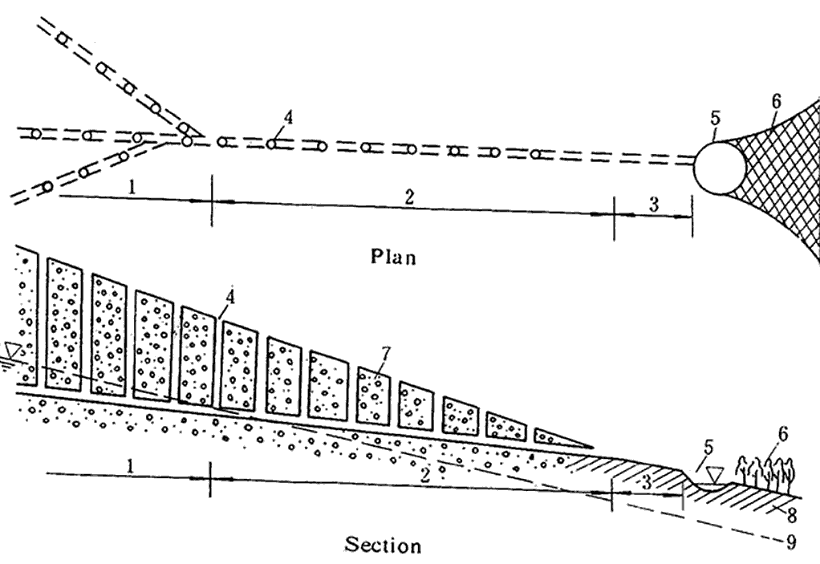
If you’re a do it yourself
kind of person though, the first part of making a qanat is to dig a series of
holes in a straight line. You then dig at the bottoms of the holes, connecting
them, to make the tunnel, long and straight with a slight slope so gravity can
do all the work. The tunnel generally starts under a hill because water tables
tend to rise along with the land above them. Again, this helps with the whole
gravity thing. As you probably guessed the water exits where you plan to grow
your food, usually a flat area with decent soil.
The set-up is such that you
can only take as much water as the spring or aquifer can provide and only as
quickly as gravity is willing to carry it.
Think for a moment of your
sink like an aquifer, your tap like the rain, and that little hole that allows
for overflow water to drain off when you leave the tap on and the plug in and
get distracted by what’s on the stove as the qanat. Right? The point I’m trying
to make is the overflow only functions when there is an excess of water.
I learned about qanats last
week so if my metaphor is not apt and you’re a hydrologist please speak now.
In Iran today there are 22
000 Qanats, 170 000 miles of underground channels, and until recently they
provided 75% of the country’s water.
One of the difficulties of
digging underground long ago was making sure you consistently dug in the
direction you wanted. By having multiple access points qanat tunnels were made
from a series of shorter tunnels that were easier to keep in line. When people
dug in stone though, or didn’t want a bunch of surface holes showing where your
tunnel was, things were different.
Imagine your name is
Hezekiah and you’re the king of Jerusalem in the 8th century BCE.
Everyone there? You are worried the Assyrians are going to attack and your
city’s main water source is outside your walls, what do you do?
For those of you who
answered dig a tunnel from two ends simultaneously for the first time in
recorded human history, you are correct. Also you’re digging through solid rock
instead of dirt, but in this case that turned out to be a positive development.
To keep the tunnels on target people on the surface could pound on the rock.
The diggers could hear those sounds and follow accordingly.
Okay, this time your name is
Eupalinos and you’re a Greek engineer on the island of Samos, just off the
modern Turkish coast. Your job, as instructed by the local tyrant, is to get
water from a spring into the city walls for an anticipated Persian attack. Same
problem, right, EXCEPT there’s a mountain in the way, and you can’t bang on a
mountain.
This is one of those
“weren’t those ancient Greeks terribly clever at mathematics stories,” and with
that in mind, Eupalinos probably only got the job because the aforementioned
tyrant had chased away Pythagoras a few years before. Yes that Pythagoras, the
one with the triangles.
So, Eupalinos goes to work,
does all the calculations and sets his diggers digging from two sides of the
mountains. Now he wasn’t a cocky man so even after doing all the calculations,
and presumably checking them at least twice, he still hedged his bets. Just
before where he figured the tunnels were meant to meet he had the diggers dig
up and dig wider.
If anyone else is thinking
of writing a screenplay about an imagined rivalry between Eupalinos and
Pythagoras, I’m right there with you. Not enough algebra based ancient Greek
rivalries in movies I say.
So water is a pretty good
reason to get your hands dirty. It’s important, and so is food, but if you ever
find yourself in a situation without food or water you still have a few
options. You can get some gold together and pop on over to your local food and
water store to buy some, or you can get some weapons together and pop on over
to your local food and water store to take some. Either way you’re going to
need some sort of metal and to get that, at some point, you’re going to have to
go underground.
There are a couple ways to
get rich in a tunnel, one is to follow a tunnel to its end where you find a dragon
sitting on a vast treasure – and probably one or two skeletons – and slay it.
The other, much more tedious method is to dig the tunnel yourself, following a
vein of whatever ore you’re after into the ground, straight to the mother lode.
When people first moved out
of the stone age mining and metallurgy were less about science and BIG DUMP
TRUCKS and more about mysticism and reverence for those who controlled the
underworld. Miners were rightly a little nervous about going underground and
taking some of the mountain king’s gold and diamonds.
They didn’t double check
their radio and hard hat before going into a tunnel, they prayed and fasted,
cleansed the body and spirit through ablutions, fasting and abstinence. The
Iranian Muqqanis did some of this, but also got to decide what days they
worked. Feeling unlucky today? Best to stay on the surface. Did you just
sneeze? That’s an automatic sick day. Fair play I say. You don’t want to wake
anyone who is sleeping in the dirt.
Even the smiths who worked
the ores on the surface were granted shamanic status in some communities. Their
tools held special properties, and their ability to fuse and mold rocks,
creating tools and jewellery was right up there with magic.
Because of the dangers
involved, supply and demand has always led what got mined. Not much call for
iron ore during the Bronze Age for example, but when knights started galloping
around wearing 100 pounds of armour iron mines became very popular indeed.
Sometimes though, no matter
what people were willing to pay, miners couldn’t help. For instance, the silver
crisis of 1465, as with most silver crises, came about because people wanted
silver and there wasn’t enough silver. Tunnels had been dug as deep as was
possible and although people were willing to go deeper they had hit the water
table and didn’t yet have the technology to pump the mine dry.
This dynamic remains at play
today. Tunnels of gold mines abandoned 100 years ago are being re-explored
because the price of gold has increased alongside our ability to dig deeper and
move water.
But before we get into
modern mines I want to make it clear we haven’t left pre-industrial tunnelling
behind us entirely. The Cerro Rico mines near the city of Potosi in Bolivia are
dug into a pile of rock affectionately referred to as “the mountain that eats
men.” Started in 1545 the mine fuelled the Spanish Empire’s silver needs until
the late 18th century.
To give you an idea about
how much silver it produced, people used to say it was enough silver to build a
bridge from the mountain to Madrid. And why not? There is also a theory that
the mine stamp for Potosi, the letters P-T-S-I superimposed on one another, is
how we get the dollar sign today. And if that isn’t impressive enough there’s a
saying in Spanish, used by Don Quixote amongst others, valer un potosi,
which means worth a potosi. It means worth A LOT OF MONEY.
At its height in the 17th
century Potosi was one of the largest cities in South America and reputedly the
richest in the world. Its Catholic churches were decorated with riches to rival
anything in the rest of Christendom, and according to something I read on the
internet church doors in Potosi faced south toward the mountain rather than
east towards…Jesus? Apparently that eastern orientation used to be a thing,
less so now.
But, as the silver lode
dried up Potosi succumbed to its reality as an arid city located at over 4000
metres elevation. Today the mine remains active, but it’s run by mining
cooperatives. Miners get paid for a day’s work but are also allowed to carry
out whatever they can and the dream of a big ol’ silver nugget remains strong.
Because there aren’t safety measure and very little in the way of ventilation,
between falls, cave-ins and silicosis from all the dust in the air a 40-year-old
miner is an old miner.
And like the miners of
centuries past those who work Potosi like to hedge their bets. On the surface
they’re devout Catholics, but the light of eternal salvation doesn’t reach
underground. Instead they look to El Tio, a diabolic denizen of the underworld,
for protection. There is a statue near the mine’s entrance where miners leave
gifts, usually the same things they use to ward off the hunger and fear of a 10
hour shift inside the mountain, namely coco leaves and 192 proof booze.
It’s as if to enter the
mine’s tunnels and survive necessitates the men becoming different beasts,
something that isn’t the humans they are on the surface. They worship a new god
and alter their brain chemistry to survive the netherworld.
If anyone is interested, the
mine has also become a backpacker destination. You can pay a few dollars and a
former miner will take you, first to the market to buy gifts for the miners -
cigarettes, coco leaves, dynamite, booze – then into the belly of the mountain.
But you’d better go soon, because apparently the mountain is so full of tunnels
some people are predicting it will collapse in on itself in the next 50 years.
Today’s industrial corporate
mines are generally much different. As they would probably say on a Discovery
Channel show: Modern mines push the limits of human ingenuity and engineering.
(music music flash flash). Modern mines have LIGHTS! And VENTILATION! And SAFE
ROOMS stocked with water, food and air supply for easy listening (wait for
laughter to die down).
The deepest mine in the
world today is TauTona Mine in South Africa, probing 3.9 kilometres below the
surface in search of gold. The largest is Kiirunavaara in Sweden with 450 km of
underground roads.
Not tunnel related, but mind
blowing just the same, is the Bingham Canyon Mine in Utah. It’s an open pit
mine, but the pit is over 1200 metres deep and really wide. Amazing what us
humans can do when we put our mind and heavy machinery to it.
To recap tunnels get us
water, and in turn help us grow food. Tunnels also provide the resources we
need for the society and culture we live with today. Without those rare earth
minerals we all know so much about our phones wouldn’t exist, and without stuff
like potash to go into fertilizer food production would be significantly
different. But we don’t just extract nature through tunnels we also move it and
ourselves around. Without tunnels much of modern urban life would be
impossible.
Let’s get wet! Again.
As of this moment the 6
longest tunnels in the world are all transporting water. The longest is the
Thirlmere Aqueduct in England that carries water into the city of Manchester
from 154km away. These aren’t sexy tunnels (although these days with the
internet, who knows). They’re working tunnels that carry water along a route
known by those who care to know, and unless one springs a leak they’ll never
make the news.
There was a time when people
were in awe of the tunnels their society had built, amazed at their own
ingenuity. And why not? City on fire: there is water to put it out. Need to
boil carrots: water comes out your wall and into the pot. Don’t like cholera:
this sewer is going to carry away your shit.
You could actually take a
raft tour through the newly completed sewers in Haussmann era Paris. These
tunnels contained not just poo, but also the promise of a limitless future
where no matter what was thrown at us human ingenuity could overcome.
And of course our attempts
to control the world through tunnels continues.
Underground pedestrian tunnels
in numerous Canadian cities allow us to get around town, from condo tower to
office tower to grocery store, while flipping the bird at winter. That is if
you can find a window that winter is looking in.
Subways, just trains in a
tunnel pal. But by putting them there you keep them off the street and increase
the third dimensional space a city has to play with. Not just down, but up as
well, because a city with a subway system can be a denser place with taller
towers and more people.
And if we really want to go
over the top, and we do – and assuming we all agree that the fourth dimension
is time – tunnels allow us to warp the fourth dimension.
The ancient Greeks knew the
fastest way between two points was in a straight line and so did the people who
built the Chunnel or the Gotthard Base Tunnel. The Chunnel is the tunnel that
runs beneath the English Channel, and probably one of the better-named tunnels
on the planet. While the Gotthard Base Tunnel, due to open in 2016 when it will
become the longest rail tunnel in the world at 57km, will join the Gotthard
Road Tunnel as two great ways to get from Italy to Switzerland without having
to climb over a mountain.
Suggesting that tunnels bend
time, and no I won’t be discussing the particle accelerator tunnel at CERN or
wormholes tonight, is premised on the notion that time is relative. Sure we try
to measure time in an absolute sense but we experience it relative to other
factors: if you’re bored time moves more slowly kind of idea. But also, by
choosing one mode of transport or one route over another you lock up time to
get from point A to point B, or free it up to do other things.
If you’re walking a set
amount of time you will cover a certain of distance, a horse gets you further,
a train further still, a bullet train? Look out! But no matter how fast your
train is moving, if you drive it into a mountain or an ocean time stops. Less
dramatically, even if you just have to put your car on a ferry, or take a
winding switchback filled road over a mountain, you’re using time to get to a
place that if you’d used a tunnel the time might be used to read a book, make a
hat or stare at a wall.
I’m not saying we should
necessarily make our lives more efficient with tunnels, forgoing every
opportunity to drive through the mountains, just that once a tunnel is there
our experience of moving from one side of the mountain to the other changes.
If a tunnel can overcome a
mountain, so to speak, it must be a powerful thing. Or, since I’m not quite
ready to ascribe sentience to tunnels, there is a power within a tunnel that
the person who knows how to use it can access. In the case of the Chunnel or
the Gotthard tunnels that power goes to the holidaymaker or shipping company
that cuts hours off their travel time.
But everyone knows about
those tunnels and to take advantage of them just requires you own a car or can
buy a ticket. When a tunnel is secret though, or system of tunnels is extremely
complex and difficult for an outsider to understand, there are different power
dynamics at play.
Just think for a moment
about the term secret passageway and everything the term brings to mind. You’re
welcome…
The two ancient water
tunnels I mentioned earlier were built to keep all the inhabitants of their
cities alive. If they lose their secret nature they lose the ability to sustain
life.
There are underground cities
in the Cappadocia region of central Turkey that were started 2800 years ago.
Again, their strength lay in the fact they were underground and concealed. But
because the cities were a series of interconnected tunnels, even if invaders
learned of their presence the tunnel system’s complexity provided another layer
of power to the inhabitants.
How many stories have been
told and movies made about prisoners of war, having had their weapons and most
of their belongings taken away. Left only with their ingenuity and pithy
attitude the prisoners find strength and purpose through the tunnel they are
slowly scraping out of the earth. Again though, secrecy is key, because the
guards know a tunnel’s power and are watching for any sign. So the tunnel’s
negative space must be spread across vegetable gardens and volleyball courts,
hiding dirt in attics and under stairs.
The Cu Chi tunnels, part of
a much larger pan-Vietnamese tunnel network, allowed the North Vietnamese
forces to operate immediately adjacent to the south’s capital of Saigon during
the Vietnam War. They weren’t just secret routes, but also supply depots,
sleeping quarters, hospitals and kitchens. Because the tunnels were hidden, and
the spaces inside them tight and confusing, America’s obvious advantages in
firepower could never be brought to bear. Even their efforts with Agent Orange,
designed to remove the North’s ability to hide in the jungle did nothing to
reveal the systems hidden underground.
And in the end all they
could do was send Willem Dafoe in with a knife between his teeth and a pistol
in his hand and hope for the best.
The tunnels under Paris –
catacombs, quarries, utility, transit and the rest of them - have provided a
hiding place for all sorts of miscreants, rebels and resisters over the
centuries. More recently they’ve also been the staging ground and infiltration
route for UX, short for Urban eXperiment, a group of artists who use the their
in-depth knowledge of the tunnels to access spaces for film festivals and art
shows, or just to build a workshop with electricity, internet access, arm
chairs and the like, then over the course of a year restore a 19th
century clock that hasn’t chimed since the 1960s.
And think of what tunnels
you hear about in the news today. Drug tunnels connecting Mexico or Canada to
the US, providing a route, usually basement to basement, that allows drug
movement out of sight. And whenever one is discovered there’s always comment about
how a bunch of drug dealers were able to build such a well-engineered
structure, complete with lights and a trolley system. People forget how long
we’ve been building tunnels without engineering degrees.
And probably my favourite
tunnels in operation today are those that provide most of the cross border
trade into and out of the Gaza Strip. Because of Israeli blockades the tunnels
often provide the only route to get needed building supplies into the
territory. The tunnels also provide a route to get cars through. Formerly taken
apart, carried through in pieces and reassembled on the other side, a quick
search on Youtube now show cars being driven through larger tunnels before
being hoisted back to the surface whole.
People go through the
tunnels for medical treatment or just to get out of Gaza to party for a bit.
Those with a lot of money can take one of the VIP tunnels, air-conditioned,
well lit and with cell phone reception. There is even one story of a lion being
brought in for the Gaza zoo. Unfortunately it wasn’t sedated properly, woke up
half way through and mauled one of the workers.
Israel has recognized the
danger these tunnels represent and have destroyed hundreds of homes near the
border and then built a reverse steel wall down into the dirt. The Palestinian
tunnellers simply went deeper.
Operators invest a fortune
to build the tunnels, and charge dearly for everything that is brought through.
The Hamas government generates a lot of its revenue by taxing the tunnel trade,
but also bans the importation of weapons and ammunition. Of course, most people
assume Hamas has its own tunnels for weapons.
To give you an idea of how
important this underground economy is, when it looked like Israel might loosen
border controls a number of tunnel operators were rumoured to have paid young
militants to fire rockets across the border because it wouldn’t be good for
business to have the restrictions relaxed.
Given their normal location
beneath tonnes of dirt it’s unsurprising that tunnels have enormous destructive
power as well. What better way to bring down a castle wall than dig a tunnel
beneath and when the time is right burn the wooden supports to bring it all
down.
And when fires or explosions
happen in tunnels inadvertently the results are of course disastrous. Even if
an explosion doesn’t result in collapse the percussive forces are all
concentrated and directed along the tunnels crushing people as they go. This
scenario played out in the Courrieres Mine in France, leaving 1099 dead in
1906, and Benxihu Colliery in China in 1942, leaving 1549 dead
When I was a child, who
knows how old, I watched a movie where two groups of kids were having a
snowball fight around a fort someone had built. I don’t remember what led to
the fight, only that it felt very violent and intense. Then the fighting
stopped. An escape tunnel had been included in the fort’s construction and it
had collapsed, killing a dog. I still remember the image of the leash coming
out from under a pile of snow very clearly, the dangers of tunnel collapses
implanted in my head forever.
That hasn’t stopped me from
going into them though.
Just after Queen’s
University bought the old women’s prison I was able to get over the wall one
night and eventually found myself in the disused steam tunnel, walking farther
and farther, accompanied but the tings, clicks and drips you might expect. It’s
amazing what absolute darkness feels like when you turn off your headlamp. Just
for a second. Then a funny thing started happening, I was feeling warmer, probably
because the tunnel was heading due south, straight for the very much still in
use Kingston Pen. I turned around.
If you don’t know where a
tunnel leads, and aren’t sheltering from the elements or hiding from pursuers
the only reason to go into a tunnel is curiosity. Even if you’re not expecting
treasure, the tunnel itself is reason enough. But once you’re in you’re
confined and directed
One holiday my girlfriend at
the time and myself were walking around a closed golf course when we found a
drainage tunnel that was coming out from under the Don Valley Parkway,
following an old creek’s route no doubt. We were just killing time and a dark
hole in the side of the highway seemed as helpful in that cause as anything.
It was probably about 130
centimetres in diameter, so you could move through it bent over but because of
the tunnels curvature and the water running down the middle your legs were
spread and your feet ended up at an angle. Less walking and more like a
shuffling waddle.
On and on it went, and in
the darkness we quickly lost a sense of distance and time. The light behind us
disappeared and on and on we went. We would stop sometimes slowly move toward
one another confirm we weren’t just two voices in the dark and we would wonder,
should we go back? How far can this go? But the tunnel always pulled us on,
because we couldn’t know what we’d find until we got there.
Eventually there was light,
so faint that it might just have been a trick of the eye and brain, something
to be blinked away. But it seemed real, and what choice did we have, so we
waddled on.
After spying the light my
guess is we walked at least 50 metres before we got to its source, and it’s
source was the sun. Up a 10 metre shaft, with a rusty ladder bolted to its
side, the outside was looking down at us through two one inch squares on a
manhole cover. And so, up the ladder, shoulder to the cover and after some loud
metal on metal scraping we were back in the world, in someone’s backyard.
Knowing there is so much
more that could be said about tunnels, I’m going to close back on the
figurative tunnel. Walking in the steel pipe under the DVP I learned that the
light at the end of a tunnel need not be extremely bright to be visible. And
when you see it, just knowing it’s there can help pull you on.
As I’ve been saying tunnels
provide all sorts of possibilities for individuals and humanity more broadly.
But sometimes, when you’re in one, whether tangible or metaphorical, a tunnel
restricts your choices to three. You can go back, you can go forward, or you
can collapse where you are and wait for the monsters to slink out of the inky
blackness to devour you. If you ever find yourself there remember, going back
doesn’t mean you’ll exit where you think you will and waiting for a monster to
eat you is boring and their tentacles are gross. But going forward, there might
be something fun there and the light, no matter how faint, is bound to appear
sooner than you think.
Oh, and if the light at the
end of the tunnel turns out to be a tunnel of light, make the choice on
entering THAT tunnel on a case by case basis.
9.14.2012
deep breath
I wrote this story for a geography department art competition in university, to be completed in whatever form you wanted based on a series of photographs. I was the only entry and won first prize!
It's amazing how close the vibe is to another story I'm working on that had its genesis in the first attempt at writing for this contest. I suppose it goes to show how much geography, or pictures of a place, can inform a mood and influence a story.
Presented here with no editing, as "on the nose" as when I wrote it.
-----------
It's amazing how close the vibe is to another story I'm working on that had its genesis in the first attempt at writing for this contest. I suppose it goes to show how much geography, or pictures of a place, can inform a mood and influence a story.
Presented here with no editing, as "on the nose" as when I wrote it.
-----------
--Deep
Breath--
Tommy
floated under the rail bridge face down.
Tommy floated under the wooden pedestrian bridge face down, not seeing
the couple out for an evening stroll perched on the railing.
“Is that
Tommy?” asked the gal.
“Atta boy
Tommy!” said the fella.
Tommy
floated down a side channel, the overhanging trees forcing the setting sun’s
darkening orange light into pleasantly nauseating dapples that played on the
water’s surface. If Tommy had been
floating face up he could have been pleasantly nauseated. Instead Tommy snagged on some roots and
stopped drifting. He stayed face down
though, the creek darkening around him as dusk ascended, filling the land’s low
spots before climbing slowly through the daylight.
Rolling
over without rush or worry Tommy refilled his lungs with one even pull before
stopping his watch and looking down the tunnel of trees. Gently blinking, the sun’s last efforts were
enough to paint Tommy’s eyelids for only an instant before the white dots
melted away.
“Tommy,
what was your time?” The question
pulled him from his reverie.
Splashing
through the river and shinnying up the supports of an overhanging balcony,
Tommy stood dripping before his inquisitor before speaking.
“12
minutes, 37 seconds. Dead on.”
“Were ya
struggling?”
“Not too
bad. Had to swim a bit to get into the
channel. Didn’t want to end up at the
mill again.
Lisa took
his arm and gave it a peck on the spot he’d been cut a few weeks before. Missing the side channel that carried him to
his friend’s house had meant hitting the rapids by the old mill and getting
smashed around a tad before he was able to get to shore.
“I still
think you should just practice on land.”
“The
water’s nice. Moves me without me
moving, I like it.”
“It’s also
wet and cold. Take this towel before
you catch a chill.”
“What do
you want to do?”
“Let’s just
walk.”
Lisa’s
house was old, at least the small town Ontario kind of old, which meant just
over a century. Made to last, out of
limestone blocks, it had lost some of its grounds to younger brethren but still
stood proudly on its lawn.
Wearing
the dry clothes he’d brought over earlier, Tommy breathed the cool evening air
as only he could. Looking at his slight
frame of average height, verging on short, you wouldn’t guess what he was
capable of.
“Leave
some for the rest of us,” giggled Lisa.
She slyly reached out to tickle Tommy’s ribs, forcing him to lose his
breath in a startled hop. “I’ll stop,”
she said before her best friend could speak the protest that had quickly appeared
on his face.
“Smell
the air. It’s perfect.”
A light
mist had crept out of the river and that damp was now imperceptibly rolling
over the two. Freshly mown lawns,
backyard fire pits and late barbecued chicken came with it. Each smell held and seemingly thickened in
the moist air, becoming a taste and something for a nose to savour. Lisa followed Tommy’s lead, pushing softly
through the night’s smells and matching his unhurried, unworried gait.
“Are we
going around by the fire hall again?”
The pair had just crossed the rail bridge, long rendered obsolete, with
no rails running to or from it anymore, in either direction.
“Guess
we could,” said Tommy staring at the town’s big stone church and its blackened
steeple, which pulled his eyes upwards to a star burning away furiously in the
sky. “Don’t you wish we could sit up
there? Or even in the fire hall
tower. Just sit back and look at the
whole town in one go.”
“It’s
just we always go around by the fire hall,” Lisa’s voice carried a hint of exasperation. “You really like retracing your steps. Heck even your floats are the same each
night.” Tommy just smiled. “You’re gonna have to walk some new routes
soon though…I guess,” she added, wishing she hadn’t said it, but glad she had
and not about to stop once started. “I
mean you’re going to New York for this Guinness thing, and I know you’ll get
the record even if you won’t have a river to float in, but after that I don’t
think you’ll want to come back here.”
Lisa was talking quickly letting things she had thought about at length
tumble out on top of one another. She
was watching Tommy’s face, hoping for a response, any glimmer of stress about
the fact they were high school graduates and about to enter a semblance of
adult life, but she wasn’t holding her breath.
“We
can’t stay in place forever,” she continued.
“Sure we could just let the world move us, see where we end up, but it
might be some place we don’t like. Or
worse still, with people we don’t care about…”
They
had stopped walking and Tommy was looking at the bank they were beside. “I know,” he began hesitantly, unsure where
to put his eyes, moving them from the building’s wall to the sidewalk. “It’s not like there’d be anything here, I
mean you’ll be gone. I’ll probably get
a job somewhere, like a different town or something, maybe travel.”
His
gaze passed over Lisa’s face, resting on her eyes for the briefest instant,
long enough to register ‘sad’ and ‘confused’ before finding the bank’s wall
again, unsure of how to continue. “Why
do you think they used this fake rock facing stuff?” he asked finally, picking
at some loose mortar. “It’s not like
there’s a shortage of quarries around here for real stone.”
“I
don’t know Tommy.” Lisa let her
sentence hang there. Wanting to press for
more she knew it would be about as effective as struggling against a rip tide.
“Hungry?”
“I
guess.”
Lisa
pointed at the Skye Dragon across the road, and over they went. After checking for traffic of course.
The
Skye Dragon Restaurant and Pub, serving Canadian and Chinese food and fully
licensed, hadn’t always had the “Cheap Food Late” that the sign
proclaimed. Mr. Lee, the owner and head
chef, had been told earlier that summer that re-serving unsold buffet food
repeatedly mightn’t be a good idea. Taking the food inspector’s advice to heart, and not wanting to
waste good, potentially profitable food, deals could now be had once more
discerning clientele were gone for the night.
Sharing a quiet and reflective plate of chow mein, followed by a more ruminative
half dozen chicken balls slathered in neon red sweet and sour sauce, Lisa and
Tommy said very little while Mrs. Lee bustled around them with a broom.
“Still
want to go to the fire hall?” asked Lisa, back on the street and glad she had
remembered a sweater. September had
apparently covertly crossed the border into August, at least for one night.
“If you
don’t mind.”
“Not at
all. Maybe someone will have left the
door open.” The silence was
uncomfortable for Lisa. She was worried
she might fill it with the wrong question.
“Why are these old wooden houses built right up on the sidewalk?” she
asked instead.
“More
like why’d they build the sidewalk so close I figure,” Tommy was sure they’d
talked about this before. “Roads used
to be for horses and they tended not to run at night, and if they did at least
kept their headlights on low.”
“Yeah,”
she smiled. “I guess when Mrs. Johnson
moves someone will tear it down.”
“Probably. I figure sheltering one person’s entire life
isn’t too bad for a house, not even counting the rest of her family that lived
there.”
Silence
fell over the pair again until they reached the fire hall, and followed the
well-worn path around back. Checking
the old rusted door more out of habit, than in the hope it would actually
yield, Tommy was astonished when it drifted open quietly at his light touch.
He
looked at Lisa and back at the door, which his mouth had decided to mimic.
“C’mon
goofy, shut your yap and let’s go!”
Lisa laughed and ran ahead of Tommy into the darkness.
The
narrow metal ladder creaked and groaned as the two cautiously climbed through
the musty blackness. No hoses were
hanging right now, at least none that could be seen or felt. Neither Lisa nor Tommy was actually sure if
the tower was still used, or if the volunteer department had a newer, better
way to keep things dry.
“There’s
a trap door, I can’t move it,” Lisa hissed between her legs to Tommy.
“I’ll
try to open it,” Tommy whispered back.
“Why are we whispering?”
“I
dunno,” said Lisa at full voice, suddenly unnerved about how her words were
received by the tower’s dank. “I just
like it better,” she breathed, managing not to jump when Tommy’s hand grabbed
her foot.
“I’m
coming up.”
The two
found themselves face to face, at least that would have been a best guess,
sharing the rungs of a ladder, barely built for one. “I guess people were skinnier back then.” Tommy braced himself, not wanting to put
touch with sight on the list of senses currently not in use. “Okay, hang on.”
And she
did, wrapping one arm around the ladder and another around Tommy’s waist. He hesitated for a moment, and Lisa tensed,
ready to release him if he asked, but Tommy said nothing. Instead staring at the spot her face would
be, he inhaled deeply, enjoying the feeling as his ribs and chest expanded into
her arm, and then thrust his shoulder sharply upward.
The
trap door shuddered and popped open a few inches, letting an instant of light
in. Just enough to reveal Lisa’s face,
serene and ethereal, with eyes closed and completely happy, before it clanged
shut and darkness returned.
Neither
moved.
“Did it
work?”
“Hmm? Oh, yeah.”
Tommy pushed the trap door open and pulled himself onto the roof before
turning and helping Lisa. The two sat
close on the roof and looked over the town, bathed in the buzzing yellow of
streetlights and the clean light of a waning moon.
“It’s a
pretty town. Look how dark the river
is.”
“Yeah.” Tommy sighed distractedly. It was a long sigh and Lisa looked at him.
The
breeze was stronger on the tower and Lisa pulled close, happy to be allowed to
feel her head move up and down with Tommy’s shoulder in a slow, even rhythm.
“You
know, maybe you can come to Toronto with me.
Get a job or something. I’ll be
there for school so at least you’ll know someone. I know the air gets to you, but you might get used to it.” Tommy listened but didn’t respond, still
looking at the river, partially obscured by trees and buildings, silently
snaking its way through the centre of town.
“I think,” he began before
pausing. “I think I like to float
because it’s a journey you don’t really control. You lift your feet and the river takes hold and there are only
little things you can do to steer. Sure
sometimes you end up some place you didn’t want to be, or it takes you longer
to get there than you thought it might, but you get there. Wherever that is. Do you know what I mean?”
But Lisa didn’t say anything,
she was crying. Tommy hugged her warmly
to him, feeling her body’s silent and gentle sobbing. With Lisa pressed into his chest he thought he smelled something
delicate and sweet, but it was carried away by the night’s breeze before he
could be sure. Probably her
shampoo. He liked that smell, tried to
take a deep breath, but didn’t mind when it came up shallow.
Subscribe to:
Posts (Atom)

 Posts
Posts

