Here is a music video I helped with.
3.15.2013


2.27.2013
the wolves come marching two by two, hurrah
A little dream I had months ago. I promised to write a poem about it, so here is not that, but there are words so that counts for something.
----
I'm on a rock in the forest and there are two wolves, one white and one black, running through the trees. There are only the two, but inseparable and simultaneous, they move like a flock of small birds. They flash and are gone, only to flash out again. It makes no sense because the forest is tall and so straight. Lodge-pole pines and poplars on a bed of dead, orange pine needles. No underbrush in an open forest, skinny trunk after skinny trunk into the distance. It's only very far away that enough trees are layered to block my view. I can see everywhere, but the wolves aren't there, then they are, then they're gone again, circling and streaking through their trompe l'oeil forest. I follow the white wolf and the black wolf as best I can but without warning another duo, grey and black, are beside my stone redoubt, gnashing at my legs. I hit them with a heavy thing until it's time to wake.
----
I'm sure there are many more dream dictionaries online, but this one seems to hit it out of the park first try so why bother look elsewhere?
"A white wolf in a dream usually symbolizes an area of your life where you are a loner or on your own. A situation that nobody else understands or that you have to do all by yourself.
A black wolf in a dream usually symbolizes a threat or sense of vulnerability. You may feel like nobody can help you or [you're] unable to get the answers you need."
Fun.
No mention of what a grey wolf means, but probably some sort of Germanic opera reference.
----
I'm on a rock in the forest and there are two wolves, one white and one black, running through the trees. There are only the two, but inseparable and simultaneous, they move like a flock of small birds. They flash and are gone, only to flash out again. It makes no sense because the forest is tall and so straight. Lodge-pole pines and poplars on a bed of dead, orange pine needles. No underbrush in an open forest, skinny trunk after skinny trunk into the distance. It's only very far away that enough trees are layered to block my view. I can see everywhere, but the wolves aren't there, then they are, then they're gone again, circling and streaking through their trompe l'oeil forest. I follow the white wolf and the black wolf as best I can but without warning another duo, grey and black, are beside my stone redoubt, gnashing at my legs. I hit them with a heavy thing until it's time to wake.
----
I'm sure there are many more dream dictionaries online, but this one seems to hit it out of the park first try so why bother look elsewhere?
"A white wolf in a dream usually symbolizes an area of your life where you are a loner or on your own. A situation that nobody else understands or that you have to do all by yourself.
A black wolf in a dream usually symbolizes a threat or sense of vulnerability. You may feel like nobody can help you or [you're] unable to get the answers you need."
Fun.
No mention of what a grey wolf means, but probably some sort of Germanic opera reference.
2.03.2013
Tunnel talk
I gave a talk on tunnels at MOUTHY, a storytelling night in Kingston. Here is the text I was working from, although given my propensity to blather don't take this as the gospel that was shared that night.
Apologies for the lack of links to sources, but that seems like too much work. Just assume it's wikipedia and go from there.
-------

Up
because two parallel lines will never cross and just in case his two tunnels
weren’t aligned, on an angle they should meet somewhere. And he dug wider in
the vertical plane because, well it makes sense.
Apologies for the lack of links to sources, but that seems like too much work. Just assume it's wikipedia and go from there.
-------
Tunnels
Oh hey guys, I speak in
public for a living because I’m a tour guide. I’m telling you this not because
I want you to expect something great here, but because I’m terrified of giving
this talk. I haven’t written and delivered a speech since grade 6 when I told
my class about the Bermuda Triangle and when I delivered that beauty I at least
had a new tracksuit on, so I was literally draped in confidence.
At my school we gave
speeches in grades 4, 5 and 6, and if you were good enough you were chosen to
speak to the whole school from the stage in the gym. Nerve-wracking stuff. But
because I made it to the gym three straight years (pause for applause) I
figured an elementary school speech would be a good format to follow. If
anything I say unnerves you, remember I’m 10 years old up here (rub hand
through thick lustrous beard)
Soooo... Let’s start with a
riddle.
What is a way to enter the
world and a way to leave it, a route to wealth and a route to monsters?
Something that can restrict your vision and your freedom of movement but can
also alter perceptions and realities of space and time and power?
The answer of course is
tunnels. TUNNELS (pump fist in air)
Amongst other definitions
the Oxford English Dictionary defines a tunnel as “A subterranean passage; a
road-way excavated under ground, especially under a hill or mountain, or
beneath the bed of a river: now most commonly on a railway; also in earliest
use on a canal, in a mine, etc.” Apparently it can also be defined as “A net
for catching partridges or water-fowl, having a pipe-like passage with a wide
opening, and narrowing towards the end.”
The online OED is a pretty
impressive thing and after skipping three other entries I found: “Applied
figuratively to a prolonged period of difficulty, suffering, etc. Frequently in
phrases [such as] light at the end of the tunnel: a long-awaited sign
that a period of hardship and adversity is nearing an end.”
And the figurative is the
spot to start, because it has some wiggle room. Tunnels are more than tubes in
the ground, even more than a partridge trap. They are spaces that hold their
transitory nature within their structure. Longer than they are wide, tunnels
drag you on to see what’s ahead, around the corner, in the dark.
Some tunnels, like Toronto’s
PATH system, connect and are full of similar commercial sights. They seem to
carry you nowhere despite a lot of walking. Others plonk you on the other side
of a mountain or across the sea when you emerge. And even entering and leaving
a tunnel by the same door, separated only by a few hours can put you in a world
previously unimaginable. Think of the people coming out of London’s tube
stations during the blitz. Hidden deep underground with only a dull notion of
what was happening above them and then emerging to find burnt rubble in place
of their city.
It’s the unknown that lies
at the other end of a tunnel that makes it exciting. The magic is in the possibility
for change and transformation - of a new world, wealth, salvation or
just mystery for mystery’s sake.
I like to think my
fascination with tunnels began when I was born. As my parents tell the story I
was a slow baby from that start. Not that I caused my mum a long labour, but
that I caused her to go into labour, then stopped, then started again a couple
more times before I was actually born. My dad, having driven like a mad man to
reach the hospital, was forced to wait until I decided it was time. Control
freak from the earliest days.
Now, with absolutely zero
medical training or a clear understanding of what specifically triggers labour,
or why some last a long time and others are over with quickly, I’m going to
assert that I took so long because I wasn’t too sure about the tunnel I was
being asked to enter.
If you can’t see the far end
of a tunnel you don’t know where it might take you. You don’t know how long the
tunnel is and you have no clue at what point you’ve gone too far. Where’s the
middle? Where’s the point of no return? Can you go back if you change your
mind?
And even if you can see the
other end there is usually a long dark space between here and there that holds
its own foreboding. There is undeniable mystery and possibility, but you have
overcome fear and choose to push on.
As for me and my birth, I
just wasn’t ready to leave the world I was in. All I knew about the outside
world I had learned through the disembodied muffles I could hear. Those sounds could
have been my parents, or they could be dragons, and I didn’t have a sword, a
shield or know what a dragon was. But then, curiosity…
And down the tunnel I went,
from darkness into the light.
Tunnels are essential to
life itself. It’s a conceit not so crazy when you realize that most of the
early tunnels people built were for obtaining and moving water. If you’re going
to invest the time and effort to hack a tunnel through a hill or mountain with
limited tools and light, at great risk to your well-being, you’re only going to
do it for something that you absolutely need.
Some of the oldest examples
of water related tunnelling are qanats, dating back 3000 years to Iran.
If anyone here is looking to
move some water in an arid environment where a canal based irrigation system
would result in too much evaporation loss and a vertical well would need to be
prohibitively deep, pay attention.
The smartest thing you can
do is probably hire a team of Muqqanis to dig the thing for you, Muqqanis being
the hereditary class of qanat diggers in Iran.
If you’re a do it yourself
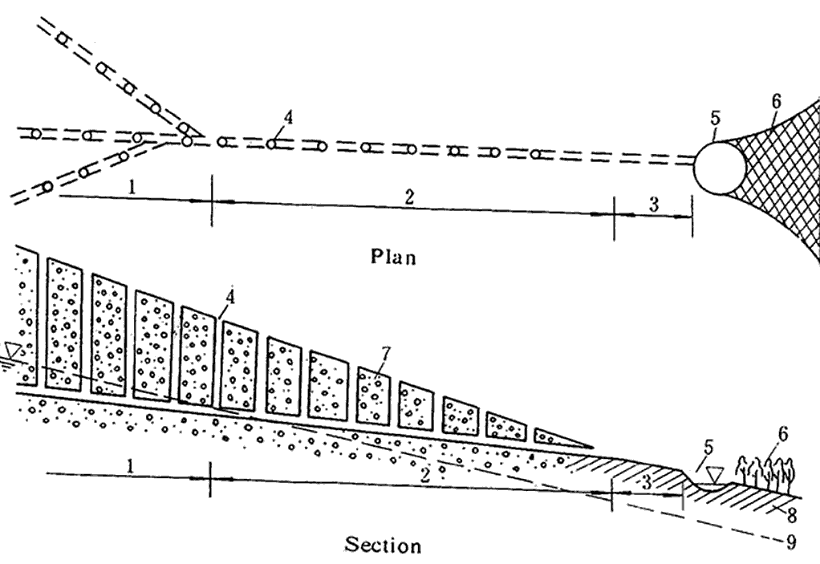
kind of person though, the first part of making a qanat is to dig a series of
holes in a straight line. You then dig at the bottoms of the holes, connecting
them, to make the tunnel, long and straight with a slight slope so gravity can
do all the work. The tunnel generally starts under a hill because water tables
tend to rise along with the land above them. Again, this helps with the whole
gravity thing. As you probably guessed the water exits where you plan to grow
your food, usually a flat area with decent soil.
The set-up is such that you
can only take as much water as the spring or aquifer can provide and only as
quickly as gravity is willing to carry it.
Think for a moment of your
sink like an aquifer, your tap like the rain, and that little hole that allows
for overflow water to drain off when you leave the tap on and the plug in and
get distracted by what’s on the stove as the qanat. Right? The point I’m trying
to make is the overflow only functions when there is an excess of water.
I learned about qanats last
week so if my metaphor is not apt and you’re a hydrologist please speak now.
In Iran today there are 22
000 Qanats, 170 000 miles of underground channels, and until recently they
provided 75% of the country’s water.
One of the difficulties of
digging underground long ago was making sure you consistently dug in the
direction you wanted. By having multiple access points qanat tunnels were made
from a series of shorter tunnels that were easier to keep in line. When people
dug in stone though, or didn’t want a bunch of surface holes showing where your
tunnel was, things were different.
Imagine your name is
Hezekiah and you’re the king of Jerusalem in the 8th century BCE.
Everyone there? You are worried the Assyrians are going to attack and your
city’s main water source is outside your walls, what do you do?
For those of you who
answered dig a tunnel from two ends simultaneously for the first time in
recorded human history, you are correct. Also you’re digging through solid rock
instead of dirt, but in this case that turned out to be a positive development.
To keep the tunnels on target people on the surface could pound on the rock.
The diggers could hear those sounds and follow accordingly.
Okay, this time your name is
Eupalinos and you’re a Greek engineer on the island of Samos, just off the
modern Turkish coast. Your job, as instructed by the local tyrant, is to get
water from a spring into the city walls for an anticipated Persian attack. Same
problem, right, EXCEPT there’s a mountain in the way, and you can’t bang on a
mountain.
This is one of those
“weren’t those ancient Greeks terribly clever at mathematics stories,” and with
that in mind, Eupalinos probably only got the job because the aforementioned
tyrant had chased away Pythagoras a few years before. Yes that Pythagoras, the
one with the triangles.
So, Eupalinos goes to work,
does all the calculations and sets his diggers digging from two sides of the
mountains. Now he wasn’t a cocky man so even after doing all the calculations,
and presumably checking them at least twice, he still hedged his bets. Just
before where he figured the tunnels were meant to meet he had the diggers dig
up and dig wider.
If anyone else is thinking
of writing a screenplay about an imagined rivalry between Eupalinos and
Pythagoras, I’m right there with you. Not enough algebra based ancient Greek
rivalries in movies I say.
So water is a pretty good
reason to get your hands dirty. It’s important, and so is food, but if you ever
find yourself in a situation without food or water you still have a few
options. You can get some gold together and pop on over to your local food and
water store to buy some, or you can get some weapons together and pop on over
to your local food and water store to take some. Either way you’re going to
need some sort of metal and to get that, at some point, you’re going to have to
go underground.
There are a couple ways to
get rich in a tunnel, one is to follow a tunnel to its end where you find a dragon
sitting on a vast treasure – and probably one or two skeletons – and slay it.
The other, much more tedious method is to dig the tunnel yourself, following a
vein of whatever ore you’re after into the ground, straight to the mother lode.
When people first moved out
of the stone age mining and metallurgy were less about science and BIG DUMP
TRUCKS and more about mysticism and reverence for those who controlled the
underworld. Miners were rightly a little nervous about going underground and
taking some of the mountain king’s gold and diamonds.
They didn’t double check
their radio and hard hat before going into a tunnel, they prayed and fasted,
cleansed the body and spirit through ablutions, fasting and abstinence. The
Iranian Muqqanis did some of this, but also got to decide what days they
worked. Feeling unlucky today? Best to stay on the surface. Did you just
sneeze? That’s an automatic sick day. Fair play I say. You don’t want to wake
anyone who is sleeping in the dirt.
Even the smiths who worked
the ores on the surface were granted shamanic status in some communities. Their
tools held special properties, and their ability to fuse and mold rocks,
creating tools and jewellery was right up there with magic.
Because of the dangers
involved, supply and demand has always led what got mined. Not much call for
iron ore during the Bronze Age for example, but when knights started galloping
around wearing 100 pounds of armour iron mines became very popular indeed.
Sometimes though, no matter
what people were willing to pay, miners couldn’t help. For instance, the silver
crisis of 1465, as with most silver crises, came about because people wanted
silver and there wasn’t enough silver. Tunnels had been dug as deep as was
possible and although people were willing to go deeper they had hit the water
table and didn’t yet have the technology to pump the mine dry.
This dynamic remains at play
today. Tunnels of gold mines abandoned 100 years ago are being re-explored
because the price of gold has increased alongside our ability to dig deeper and
move water.
But before we get into
modern mines I want to make it clear we haven’t left pre-industrial tunnelling
behind us entirely. The Cerro Rico mines near the city of Potosi in Bolivia are
dug into a pile of rock affectionately referred to as “the mountain that eats
men.” Started in 1545 the mine fuelled the Spanish Empire’s silver needs until
the late 18th century.
To give you an idea about
how much silver it produced, people used to say it was enough silver to build a
bridge from the mountain to Madrid. And why not? There is also a theory that
the mine stamp for Potosi, the letters P-T-S-I superimposed on one another, is
how we get the dollar sign today. And if that isn’t impressive enough there’s a
saying in Spanish, used by Don Quixote amongst others, valer un potosi,
which means worth a potosi. It means worth A LOT OF MONEY.
At its height in the 17th
century Potosi was one of the largest cities in South America and reputedly the
richest in the world. Its Catholic churches were decorated with riches to rival
anything in the rest of Christendom, and according to something I read on the
internet church doors in Potosi faced south toward the mountain rather than
east towards…Jesus? Apparently that eastern orientation used to be a thing,
less so now.
But, as the silver lode
dried up Potosi succumbed to its reality as an arid city located at over 4000
metres elevation. Today the mine remains active, but it’s run by mining
cooperatives. Miners get paid for a day’s work but are also allowed to carry
out whatever they can and the dream of a big ol’ silver nugget remains strong.
Because there aren’t safety measure and very little in the way of ventilation,
between falls, cave-ins and silicosis from all the dust in the air a 40-year-old
miner is an old miner.
And like the miners of
centuries past those who work Potosi like to hedge their bets. On the surface
they’re devout Catholics, but the light of eternal salvation doesn’t reach
underground. Instead they look to El Tio, a diabolic denizen of the underworld,
for protection. There is a statue near the mine’s entrance where miners leave
gifts, usually the same things they use to ward off the hunger and fear of a 10
hour shift inside the mountain, namely coco leaves and 192 proof booze.
It’s as if to enter the
mine’s tunnels and survive necessitates the men becoming different beasts,
something that isn’t the humans they are on the surface. They worship a new god
and alter their brain chemistry to survive the netherworld.
If anyone is interested, the
mine has also become a backpacker destination. You can pay a few dollars and a
former miner will take you, first to the market to buy gifts for the miners -
cigarettes, coco leaves, dynamite, booze – then into the belly of the mountain.
But you’d better go soon, because apparently the mountain is so full of tunnels
some people are predicting it will collapse in on itself in the next 50 years.
Today’s industrial corporate
mines are generally much different. As they would probably say on a Discovery
Channel show: Modern mines push the limits of human ingenuity and engineering.
(music music flash flash). Modern mines have LIGHTS! And VENTILATION! And SAFE
ROOMS stocked with water, food and air supply for easy listening (wait for
laughter to die down).
The deepest mine in the
world today is TauTona Mine in South Africa, probing 3.9 kilometres below the
surface in search of gold. The largest is Kiirunavaara in Sweden with 450 km of
underground roads.
Not tunnel related, but mind
blowing just the same, is the Bingham Canyon Mine in Utah. It’s an open pit
mine, but the pit is over 1200 metres deep and really wide. Amazing what us
humans can do when we put our mind and heavy machinery to it.
To recap tunnels get us
water, and in turn help us grow food. Tunnels also provide the resources we
need for the society and culture we live with today. Without those rare earth
minerals we all know so much about our phones wouldn’t exist, and without stuff
like potash to go into fertilizer food production would be significantly
different. But we don’t just extract nature through tunnels we also move it and
ourselves around. Without tunnels much of modern urban life would be
impossible.
Let’s get wet! Again.
As of this moment the 6
longest tunnels in the world are all transporting water. The longest is the
Thirlmere Aqueduct in England that carries water into the city of Manchester
from 154km away. These aren’t sexy tunnels (although these days with the
internet, who knows). They’re working tunnels that carry water along a route
known by those who care to know, and unless one springs a leak they’ll never
make the news.
There was a time when people
were in awe of the tunnels their society had built, amazed at their own
ingenuity. And why not? City on fire: there is water to put it out. Need to
boil carrots: water comes out your wall and into the pot. Don’t like cholera:
this sewer is going to carry away your shit.
You could actually take a
raft tour through the newly completed sewers in Haussmann era Paris. These
tunnels contained not just poo, but also the promise of a limitless future
where no matter what was thrown at us human ingenuity could overcome.
And of course our attempts
to control the world through tunnels continues.
Underground pedestrian tunnels
in numerous Canadian cities allow us to get around town, from condo tower to
office tower to grocery store, while flipping the bird at winter. That is if
you can find a window that winter is looking in.
Subways, just trains in a
tunnel pal. But by putting them there you keep them off the street and increase
the third dimensional space a city has to play with. Not just down, but up as
well, because a city with a subway system can be a denser place with taller
towers and more people.
And if we really want to go
over the top, and we do – and assuming we all agree that the fourth dimension
is time – tunnels allow us to warp the fourth dimension.
The ancient Greeks knew the
fastest way between two points was in a straight line and so did the people who
built the Chunnel or the Gotthard Base Tunnel. The Chunnel is the tunnel that
runs beneath the English Channel, and probably one of the better-named tunnels
on the planet. While the Gotthard Base Tunnel, due to open in 2016 when it will
become the longest rail tunnel in the world at 57km, will join the Gotthard
Road Tunnel as two great ways to get from Italy to Switzerland without having
to climb over a mountain.
Suggesting that tunnels bend
time, and no I won’t be discussing the particle accelerator tunnel at CERN or
wormholes tonight, is premised on the notion that time is relative. Sure we try
to measure time in an absolute sense but we experience it relative to other
factors: if you’re bored time moves more slowly kind of idea. But also, by
choosing one mode of transport or one route over another you lock up time to
get from point A to point B, or free it up to do other things.
If you’re walking a set
amount of time you will cover a certain of distance, a horse gets you further,
a train further still, a bullet train? Look out! But no matter how fast your
train is moving, if you drive it into a mountain or an ocean time stops. Less
dramatically, even if you just have to put your car on a ferry, or take a
winding switchback filled road over a mountain, you’re using time to get to a
place that if you’d used a tunnel the time might be used to read a book, make a
hat or stare at a wall.
I’m not saying we should
necessarily make our lives more efficient with tunnels, forgoing every
opportunity to drive through the mountains, just that once a tunnel is there
our experience of moving from one side of the mountain to the other changes.
If a tunnel can overcome a
mountain, so to speak, it must be a powerful thing. Or, since I’m not quite
ready to ascribe sentience to tunnels, there is a power within a tunnel that
the person who knows how to use it can access. In the case of the Chunnel or
the Gotthard tunnels that power goes to the holidaymaker or shipping company
that cuts hours off their travel time.
But everyone knows about
those tunnels and to take advantage of them just requires you own a car or can
buy a ticket. When a tunnel is secret though, or system of tunnels is extremely
complex and difficult for an outsider to understand, there are different power
dynamics at play.
Just think for a moment
about the term secret passageway and everything the term brings to mind. You’re
welcome…
The two ancient water
tunnels I mentioned earlier were built to keep all the inhabitants of their
cities alive. If they lose their secret nature they lose the ability to sustain
life.
There are underground cities
in the Cappadocia region of central Turkey that were started 2800 years ago.
Again, their strength lay in the fact they were underground and concealed. But
because the cities were a series of interconnected tunnels, even if invaders
learned of their presence the tunnel system’s complexity provided another layer
of power to the inhabitants.
How many stories have been
told and movies made about prisoners of war, having had their weapons and most
of their belongings taken away. Left only with their ingenuity and pithy
attitude the prisoners find strength and purpose through the tunnel they are
slowly scraping out of the earth. Again though, secrecy is key, because the
guards know a tunnel’s power and are watching for any sign. So the tunnel’s
negative space must be spread across vegetable gardens and volleyball courts,
hiding dirt in attics and under stairs.
The Cu Chi tunnels, part of
a much larger pan-Vietnamese tunnel network, allowed the North Vietnamese
forces to operate immediately adjacent to the south’s capital of Saigon during
the Vietnam War. They weren’t just secret routes, but also supply depots,
sleeping quarters, hospitals and kitchens. Because the tunnels were hidden, and
the spaces inside them tight and confusing, America’s obvious advantages in
firepower could never be brought to bear. Even their efforts with Agent Orange,
designed to remove the North’s ability to hide in the jungle did nothing to
reveal the systems hidden underground.
And in the end all they
could do was send Willem Dafoe in with a knife between his teeth and a pistol
in his hand and hope for the best.
The tunnels under Paris –
catacombs, quarries, utility, transit and the rest of them - have provided a
hiding place for all sorts of miscreants, rebels and resisters over the
centuries. More recently they’ve also been the staging ground and infiltration
route for UX, short for Urban eXperiment, a group of artists who use the their
in-depth knowledge of the tunnels to access spaces for film festivals and art
shows, or just to build a workshop with electricity, internet access, arm
chairs and the like, then over the course of a year restore a 19th
century clock that hasn’t chimed since the 1960s.
And think of what tunnels
you hear about in the news today. Drug tunnels connecting Mexico or Canada to
the US, providing a route, usually basement to basement, that allows drug
movement out of sight. And whenever one is discovered there’s always comment about
how a bunch of drug dealers were able to build such a well-engineered
structure, complete with lights and a trolley system. People forget how long
we’ve been building tunnels without engineering degrees.
And probably my favourite
tunnels in operation today are those that provide most of the cross border
trade into and out of the Gaza Strip. Because of Israeli blockades the tunnels
often provide the only route to get needed building supplies into the
territory. The tunnels also provide a route to get cars through. Formerly taken
apart, carried through in pieces and reassembled on the other side, a quick
search on Youtube now show cars being driven through larger tunnels before
being hoisted back to the surface whole.
People go through the
tunnels for medical treatment or just to get out of Gaza to party for a bit.
Those with a lot of money can take one of the VIP tunnels, air-conditioned,
well lit and with cell phone reception. There is even one story of a lion being
brought in for the Gaza zoo. Unfortunately it wasn’t sedated properly, woke up
half way through and mauled one of the workers.
Israel has recognized the
danger these tunnels represent and have destroyed hundreds of homes near the
border and then built a reverse steel wall down into the dirt. The Palestinian
tunnellers simply went deeper.
Operators invest a fortune
to build the tunnels, and charge dearly for everything that is brought through.
The Hamas government generates a lot of its revenue by taxing the tunnel trade,
but also bans the importation of weapons and ammunition. Of course, most people
assume Hamas has its own tunnels for weapons.
To give you an idea of how
important this underground economy is, when it looked like Israel might loosen
border controls a number of tunnel operators were rumoured to have paid young
militants to fire rockets across the border because it wouldn’t be good for
business to have the restrictions relaxed.
Given their normal location
beneath tonnes of dirt it’s unsurprising that tunnels have enormous destructive
power as well. What better way to bring down a castle wall than dig a tunnel
beneath and when the time is right burn the wooden supports to bring it all
down.
And when fires or explosions
happen in tunnels inadvertently the results are of course disastrous. Even if
an explosion doesn’t result in collapse the percussive forces are all
concentrated and directed along the tunnels crushing people as they go. This
scenario played out in the Courrieres Mine in France, leaving 1099 dead in
1906, and Benxihu Colliery in China in 1942, leaving 1549 dead
When I was a child, who
knows how old, I watched a movie where two groups of kids were having a
snowball fight around a fort someone had built. I don’t remember what led to
the fight, only that it felt very violent and intense. Then the fighting
stopped. An escape tunnel had been included in the fort’s construction and it
had collapsed, killing a dog. I still remember the image of the leash coming
out from under a pile of snow very clearly, the dangers of tunnel collapses
implanted in my head forever.
That hasn’t stopped me from
going into them though.
Just after Queen’s
University bought the old women’s prison I was able to get over the wall one
night and eventually found myself in the disused steam tunnel, walking farther
and farther, accompanied but the tings, clicks and drips you might expect. It’s
amazing what absolute darkness feels like when you turn off your headlamp. Just
for a second. Then a funny thing started happening, I was feeling warmer, probably
because the tunnel was heading due south, straight for the very much still in
use Kingston Pen. I turned around.
If you don’t know where a
tunnel leads, and aren’t sheltering from the elements or hiding from pursuers
the only reason to go into a tunnel is curiosity. Even if you’re not expecting
treasure, the tunnel itself is reason enough. But once you’re in you’re
confined and directed
One holiday my girlfriend at
the time and myself were walking around a closed golf course when we found a
drainage tunnel that was coming out from under the Don Valley Parkway,
following an old creek’s route no doubt. We were just killing time and a dark
hole in the side of the highway seemed as helpful in that cause as anything.
It was probably about 130
centimetres in diameter, so you could move through it bent over but because of
the tunnels curvature and the water running down the middle your legs were
spread and your feet ended up at an angle. Less walking and more like a
shuffling waddle.
On and on it went, and in
the darkness we quickly lost a sense of distance and time. The light behind us
disappeared and on and on we went. We would stop sometimes slowly move toward
one another confirm we weren’t just two voices in the dark and we would wonder,
should we go back? How far can this go? But the tunnel always pulled us on,
because we couldn’t know what we’d find until we got there.
Eventually there was light,
so faint that it might just have been a trick of the eye and brain, something
to be blinked away. But it seemed real, and what choice did we have, so we
waddled on.
After spying the light my
guess is we walked at least 50 metres before we got to its source, and it’s
source was the sun. Up a 10 metre shaft, with a rusty ladder bolted to its
side, the outside was looking down at us through two one inch squares on a
manhole cover. And so, up the ladder, shoulder to the cover and after some loud
metal on metal scraping we were back in the world, in someone’s backyard.
Knowing there is so much
more that could be said about tunnels, I’m going to close back on the
figurative tunnel. Walking in the steel pipe under the DVP I learned that the
light at the end of a tunnel need not be extremely bright to be visible. And
when you see it, just knowing it’s there can help pull you on.
As I’ve been saying tunnels
provide all sorts of possibilities for individuals and humanity more broadly.
But sometimes, when you’re in one, whether tangible or metaphorical, a tunnel
restricts your choices to three. You can go back, you can go forward, or you
can collapse where you are and wait for the monsters to slink out of the inky
blackness to devour you. If you ever find yourself there remember, going back
doesn’t mean you’ll exit where you think you will and waiting for a monster to
eat you is boring and their tentacles are gross. But going forward, there might
be something fun there and the light, no matter how faint, is bound to appear
sooner than you think.
Oh, and if the light at the
end of the tunnel turns out to be a tunnel of light, make the choice on
entering THAT tunnel on a case by case basis.
9.14.2012
deep breath
I wrote this story for a geography department art competition in university, to be completed in whatever form you wanted based on a series of photographs. I was the only entry and won first prize!
It's amazing how close the vibe is to another story I'm working on that had its genesis in the first attempt at writing for this contest. I suppose it goes to show how much geography, or pictures of a place, can inform a mood and influence a story.
Presented here with no editing, as "on the nose" as when I wrote it.
-----------
It's amazing how close the vibe is to another story I'm working on that had its genesis in the first attempt at writing for this contest. I suppose it goes to show how much geography, or pictures of a place, can inform a mood and influence a story.
Presented here with no editing, as "on the nose" as when I wrote it.
-----------
--Deep
Breath--
Tommy
floated under the rail bridge face down.
Tommy floated under the wooden pedestrian bridge face down, not seeing
the couple out for an evening stroll perched on the railing.
“Is that
Tommy?” asked the gal.
“Atta boy
Tommy!” said the fella.
Tommy
floated down a side channel, the overhanging trees forcing the setting sun’s
darkening orange light into pleasantly nauseating dapples that played on the
water’s surface. If Tommy had been
floating face up he could have been pleasantly nauseated. Instead Tommy snagged on some roots and
stopped drifting. He stayed face down
though, the creek darkening around him as dusk ascended, filling the land’s low
spots before climbing slowly through the daylight.
Rolling
over without rush or worry Tommy refilled his lungs with one even pull before
stopping his watch and looking down the tunnel of trees. Gently blinking, the sun’s last efforts were
enough to paint Tommy’s eyelids for only an instant before the white dots
melted away.
“Tommy,
what was your time?” The question
pulled him from his reverie.
Splashing
through the river and shinnying up the supports of an overhanging balcony,
Tommy stood dripping before his inquisitor before speaking.
“12
minutes, 37 seconds. Dead on.”
“Were ya
struggling?”
“Not too
bad. Had to swim a bit to get into the
channel. Didn’t want to end up at the
mill again.
Lisa took
his arm and gave it a peck on the spot he’d been cut a few weeks before. Missing the side channel that carried him to
his friend’s house had meant hitting the rapids by the old mill and getting
smashed around a tad before he was able to get to shore.
“I still
think you should just practice on land.”
“The
water’s nice. Moves me without me
moving, I like it.”
“It’s also
wet and cold. Take this towel before
you catch a chill.”
“What do
you want to do?”
“Let’s just
walk.”
Lisa’s
house was old, at least the small town Ontario kind of old, which meant just
over a century. Made to last, out of
limestone blocks, it had lost some of its grounds to younger brethren but still
stood proudly on its lawn.
Wearing
the dry clothes he’d brought over earlier, Tommy breathed the cool evening air
as only he could. Looking at his slight
frame of average height, verging on short, you wouldn’t guess what he was
capable of.
“Leave
some for the rest of us,” giggled Lisa.
She slyly reached out to tickle Tommy’s ribs, forcing him to lose his
breath in a startled hop. “I’ll stop,”
she said before her best friend could speak the protest that had quickly appeared
on his face.
“Smell
the air. It’s perfect.”
A light
mist had crept out of the river and that damp was now imperceptibly rolling
over the two. Freshly mown lawns,
backyard fire pits and late barbecued chicken came with it. Each smell held and seemingly thickened in
the moist air, becoming a taste and something for a nose to savour. Lisa followed Tommy’s lead, pushing softly
through the night’s smells and matching his unhurried, unworried gait.
“Are we
going around by the fire hall again?”
The pair had just crossed the rail bridge, long rendered obsolete, with
no rails running to or from it anymore, in either direction.
“Guess
we could,” said Tommy staring at the town’s big stone church and its blackened
steeple, which pulled his eyes upwards to a star burning away furiously in the
sky. “Don’t you wish we could sit up
there? Or even in the fire hall
tower. Just sit back and look at the
whole town in one go.”
“It’s
just we always go around by the fire hall,” Lisa’s voice carried a hint of exasperation. “You really like retracing your steps. Heck even your floats are the same each
night.” Tommy just smiled. “You’re gonna have to walk some new routes
soon though…I guess,” she added, wishing she hadn’t said it, but glad she had
and not about to stop once started. “I
mean you’re going to New York for this Guinness thing, and I know you’ll get
the record even if you won’t have a river to float in, but after that I don’t
think you’ll want to come back here.”
Lisa was talking quickly letting things she had thought about at length
tumble out on top of one another. She
was watching Tommy’s face, hoping for a response, any glimmer of stress about
the fact they were high school graduates and about to enter a semblance of
adult life, but she wasn’t holding her breath.
“We
can’t stay in place forever,” she continued.
“Sure we could just let the world move us, see where we end up, but it
might be some place we don’t like. Or
worse still, with people we don’t care about…”
They
had stopped walking and Tommy was looking at the bank they were beside. “I know,” he began hesitantly, unsure where
to put his eyes, moving them from the building’s wall to the sidewalk. “It’s not like there’d be anything here, I
mean you’ll be gone. I’ll probably get
a job somewhere, like a different town or something, maybe travel.”
His
gaze passed over Lisa’s face, resting on her eyes for the briefest instant,
long enough to register ‘sad’ and ‘confused’ before finding the bank’s wall
again, unsure of how to continue. “Why
do you think they used this fake rock facing stuff?” he asked finally, picking
at some loose mortar. “It’s not like
there’s a shortage of quarries around here for real stone.”
“I
don’t know Tommy.” Lisa let her
sentence hang there. Wanting to press for
more she knew it would be about as effective as struggling against a rip tide.
“Hungry?”
“I
guess.”
Lisa
pointed at the Skye Dragon across the road, and over they went. After checking for traffic of course.
The
Skye Dragon Restaurant and Pub, serving Canadian and Chinese food and fully
licensed, hadn’t always had the “Cheap Food Late” that the sign
proclaimed. Mr. Lee, the owner and head
chef, had been told earlier that summer that re-serving unsold buffet food
repeatedly mightn’t be a good idea. Taking the food inspector’s advice to heart, and not wanting to
waste good, potentially profitable food, deals could now be had once more
discerning clientele were gone for the night.
Sharing a quiet and reflective plate of chow mein, followed by a more ruminative
half dozen chicken balls slathered in neon red sweet and sour sauce, Lisa and
Tommy said very little while Mrs. Lee bustled around them with a broom.
“Still
want to go to the fire hall?” asked Lisa, back on the street and glad she had
remembered a sweater. September had
apparently covertly crossed the border into August, at least for one night.
“If you
don’t mind.”
“Not at
all. Maybe someone will have left the
door open.” The silence was
uncomfortable for Lisa. She was worried
she might fill it with the wrong question.
“Why are these old wooden houses built right up on the sidewalk?” she
asked instead.
“More
like why’d they build the sidewalk so close I figure,” Tommy was sure they’d
talked about this before. “Roads used
to be for horses and they tended not to run at night, and if they did at least
kept their headlights on low.”
“Yeah,”
she smiled. “I guess when Mrs. Johnson
moves someone will tear it down.”
“Probably. I figure sheltering one person’s entire life
isn’t too bad for a house, not even counting the rest of her family that lived
there.”
Silence
fell over the pair again until they reached the fire hall, and followed the
well-worn path around back. Checking
the old rusted door more out of habit, than in the hope it would actually
yield, Tommy was astonished when it drifted open quietly at his light touch.
He
looked at Lisa and back at the door, which his mouth had decided to mimic.
“C’mon
goofy, shut your yap and let’s go!”
Lisa laughed and ran ahead of Tommy into the darkness.
The
narrow metal ladder creaked and groaned as the two cautiously climbed through
the musty blackness. No hoses were
hanging right now, at least none that could be seen or felt. Neither Lisa nor Tommy was actually sure if
the tower was still used, or if the volunteer department had a newer, better
way to keep things dry.
“There’s
a trap door, I can’t move it,” Lisa hissed between her legs to Tommy.
“I’ll
try to open it,” Tommy whispered back.
“Why are we whispering?”
“I
dunno,” said Lisa at full voice, suddenly unnerved about how her words were
received by the tower’s dank. “I just
like it better,” she breathed, managing not to jump when Tommy’s hand grabbed
her foot.
“I’m
coming up.”
The two
found themselves face to face, at least that would have been a best guess,
sharing the rungs of a ladder, barely built for one. “I guess people were skinnier back then.” Tommy braced himself, not wanting to put
touch with sight on the list of senses currently not in use. “Okay, hang on.”
And she
did, wrapping one arm around the ladder and another around Tommy’s waist. He hesitated for a moment, and Lisa tensed,
ready to release him if he asked, but Tommy said nothing. Instead staring at the spot her face would
be, he inhaled deeply, enjoying the feeling as his ribs and chest expanded into
her arm, and then thrust his shoulder sharply upward.
The
trap door shuddered and popped open a few inches, letting an instant of light
in. Just enough to reveal Lisa’s face,
serene and ethereal, with eyes closed and completely happy, before it clanged
shut and darkness returned.
Neither
moved.
“Did it
work?”
“Hmm? Oh, yeah.”
Tommy pushed the trap door open and pulled himself onto the roof before
turning and helping Lisa. The two sat
close on the roof and looked over the town, bathed in the buzzing yellow of
streetlights and the clean light of a waning moon.
“It’s a
pretty town. Look how dark the river
is.”
“Yeah.” Tommy sighed distractedly. It was a long sigh and Lisa looked at him.
The
breeze was stronger on the tower and Lisa pulled close, happy to be allowed to
feel her head move up and down with Tommy’s shoulder in a slow, even rhythm.
“You
know, maybe you can come to Toronto with me.
Get a job or something. I’ll be
there for school so at least you’ll know someone. I know the air gets to you, but you might get used to it.” Tommy listened but didn’t respond, still
looking at the river, partially obscured by trees and buildings, silently
snaking its way through the centre of town.
“I think,” he began before
pausing. “I think I like to float
because it’s a journey you don’t really control. You lift your feet and the river takes hold and there are only
little things you can do to steer. Sure
sometimes you end up some place you didn’t want to be, or it takes you longer
to get there than you thought it might, but you get there. Wherever that is. Do you know what I mean?”
But Lisa didn’t say anything,
she was crying. Tommy hugged her warmly
to him, feeling her body’s silent and gentle sobbing. With Lisa pressed into his chest he thought he smelled something
delicate and sweet, but it was carried away by the night’s breeze before he
could be sure. Probably her
shampoo. He liked that smell, tried to
take a deep breath, but didn’t mind when it came up shallow.
7.16.2012

7.12.2012
Oh shiiit you done thought I'd retired this beast?
I don't really have anything to say. This is just an excuse to post some things friends are pop pop popping out with.
First Fringe.
Tony Ho has a Fringe show called Sad People. Do you have internet? Here is a website. Only two shows left! I have seen it and it is very good and I will likely see it again.
Camp Schecky is a show I have not seen, but it takes place on a bus and is therefore great! Similarly, a website. You're going to have to line up early for that one because all the advance tickets are sold!
Vic Harbour too! A very different mood than what's above, but well worth the hour.
Now a short film. Do you know Andy Landen? If you don't you should. The man BREAKS THE MOLD with the standard boohoo, my relationship is sad story with...well, this.
Watch it, love it. Thank me later.
Lose Yourself, Save Yourself - Short Film from Andy Landen on Vimeo.
First Fringe.
Tony Ho has a Fringe show called Sad People. Do you have internet? Here is a website. Only two shows left! I have seen it and it is very good and I will likely see it again.
Camp Schecky is a show I have not seen, but it takes place on a bus and is therefore great! Similarly, a website. You're going to have to line up early for that one because all the advance tickets are sold!
Vic Harbour too! A very different mood than what's above, but well worth the hour.
Now a short film. Do you know Andy Landen? If you don't you should. The man BREAKS THE MOLD with the standard boohoo, my relationship is sad story with...well, this.
Watch it, love it. Thank me later.
Lose Yourself, Save Yourself - Short Film from Andy Landen on Vimeo.
2.01.2012

12.04.2011
mirage, some thoughts from a Victorian gentleman
Walking home yesterday I found a pile of books and magazines on the sidewalk. Old Architectural Digests and paperback thrillers mostly, but also one really weird-neat thing. As far as I can tell it's a self-published journal written by one James Charles Simpton, about whom the internet tells me absolutely nothing. The book runs from 1860 to 1874, sometimes entries happen daily (or almost) and sometimes, mainly near the end, there are huge gaps (hello June 1872 to January 1874).
He never mentions working but seems to have money that he spends mainly on religious icons and statuary, illegal pornography, and food. A lot of it is vague and I sometimes wish he had more specific things to say. About this Elizabeth Morris woman specifically, rather than just writing more shit poetry about her ashen face and blood red cheeks. Woo woo, racy!
It's neat mostly because it's there, a person from a different era complaining about stuff (train was late, winter turnips are the worst, etc.), and I guess in that way we can draw some blog parallels.
HOWEVER, there are parts where he does more thinking, his take on religion being a good example. To Mr. Simpton Christianity is number one and Catholicism number one within Christianity, although at the same time he considers defending a specific religion as the "one true" anything to be beyond practicality. He likes Catholicism best and everyone else is free to dance beneath a full moon at their leisure. Fair enough I say, a reasoned personal argument on his faith and the belief structure he takes most solace from. BUT THEN he footnotes a few suggested changes to the traditional Latin mass; everything looks largely the same - church, robes, incense, chanting and whatnot - but instead of everyone listening passively, the service is more like an elaborate orgy pantomime (fair enough) with only very brief and seemingly unsatisfying sexual contact. What's the point of that bud?
I don't know if he ever figured out what is obviously a complex relationship with his faith, but in the book's final entry, and the apparent end to his diarist career, he expresses some very specific feelings about the economy (SPOILER ALERT: he isn't super positive). I've typed out Simpton's thoughts around what he saw emerging from the thick smog of a nascent industrial London. I'll let his words stand alone, and leave it to you to decide how exactly one goes about having dreams like the one he describes near the end!
-----
January 23rd, 1874
January 23rd, 1874
On St. Helen's day past I was the proud recipient of C. Dickens' book The Life and Adventures of Martin Chuzzlewit but have only just now finished reading it. Rather, re-reading it, as it passed before me two decades previous. Reading this time I was struck by a shockingly clever, but inevitably hopeless, scandalous ruse executed by one of the characters, a Montague Tigg. The purpose behind the plan is to become exceedingly wealthy and to explain it I will generalize away from the book's particular example. To become rich in this fashion one must first establish a club or a fund where members are offered returns from some ephemeral, and often unspecified, investment, preferably one that sounds very exciting but is also very difficult to confirm as an actual thing. Investing in an imagined gold mine on an obscure and far off island is an ideal example. The gold mine does not exist and therefore any profits used to demonstrate the project's viability must come from somewhere else, namely an ever greater number of new investors.
The system seems to work and can provide handsome profits for those looking to make withdrawals so long as new gullible entrants can be found to contribute their monies. If no one new can be found, or the new wealth does not match withdrawals, the entire scheme fails. It should also be noted that whatever group or individual initiated the scheme is most likely taking their pound of flesh the whole time as well. Oh wealth!
The whole thing is of course highly corrupt and morally bankrupt, but hardly a new idea. As preposterous as it might sound, a similar system was used to prop-up the mighty Roman Empire long after it should have died, succumbing to its over-reach, resource depletion and a Sybaritic lifestyle amongst its ruling class. In the Roman case, however, the noble offer of citizenship was extended rather than the crass gleam of gold. Of course with the advantages citizenship provided around taxation, access to markets and mobility a promise of increased wealth was implicit in the offer. Oh wealth! Its promise is enough to encourage obeyance and render barbarian and Imperial interests as one.
It is revealing that an Empire grown too big, unable to sustain its borders and economic networks, thought growing those selfsame networks and borders, increasing its population and bureaucratic apparatus, would solve its problems. People are blinded by greed, and in this situation those in charge ignored that the behemoth they sat upon had long ago ceased its rattling and wheezing death throes. Unable to grasp reality they tried to grow through a difficult spell, but their system only worked so long as their were more people willing to join. Once conquest became too difficult, or the newly conquered recognized it was an animated corpse they had been subsumed by, there was no interest in contributing sweat and gold to imperial coffers. Citizenship means nothing when the nation supposedly granting it relevance is but a miasmatic fog.
People realized they were better offer pillaging the Empire rather than joining it, and in that respect they were doing what the emperors, senators and equestrians had been doing for centuries. One group used swords and flame, while the other used laws, bureaucracy and tax collectors.
Given the eventual results, the leaders of Empire might have been better to share their wealth,
but they were blinded, not by greed as some might suggest, but by the fear that in sharing what they had amassed they might lose their vaunted status and moneys. Living a life of opulence and excess disguises what life for the lower strata of society is really like. It provides ample opportunity to misapprehend the life of work and getting-by led by many, creating instead a terrifying imagined reality where life is dirt cake and urine for wine. Although centuries before Malthus these people must have grasped what he put to paper, namely that there is only so much to be shared and if you get more then certainly I must expect less.
Given the eventual results, the leaders of Empire might have been better to share their wealth,
but they were blinded, not by greed as some might suggest, but by the fear that in sharing what they had amassed they might lose their vaunted status and moneys. Living a life of opulence and excess disguises what life for the lower strata of society is really like. It provides ample opportunity to misapprehend the life of work and getting-by led by many, creating instead a terrifying imagined reality where life is dirt cake and urine for wine. Although centuries before Malthus these people must have grasped what he put to paper, namely that there is only so much to be shared and if you get more then certainly I must expect less.
I write at length about the Roman Empire because it is highly illustrative of humanity's abilities at self-deception and delusion, particularly when greed has taken hold. A man stands in the market collecting gold and silver from his fellows and as a wall behind him begins to crumble he does not move to safety, so focused is he on money, only perhaps commenting on the strange clouds that have appeared to make his counting more difficult.
I wonder if we can ever learn from our history and build a better future. Today the actions of those who rally and struggle for the rights of workers, demanding equitable distribution of wealth, might present some promise. But even now I look at this nascent movement and have my doubts. As leaders come to the fore won't they inevitably demand a greater share of what is produced so they can insure the system, under their bold leadership, will continue to function smoothly? Are there truly pure people in the world who are immune to wealth, or more realistically the comforts and satisfactions that wealth can so readily provide?
In my idle more than once I have dreamt future nations into being where many peoples led themselves into communal, cooperative perfection. Even in my dreams though, as the nation strove to greater wealth those who had once led as equals became more thoroughly entrenched and controlling of political, military and economic spheres. From outward appearances it seemed they had learnt from the past and were willing to share their nation's riches with all their fellows, but in the end it was a mirage. The mirage wavered but broke as people multiplied and resources dwindled, it could no longer hide the few who held true wealth and power. To stave off the inevitable, instead of citizenship money appeared, shuffled and created from thin air. Just as good as the old money, better, they said, but newer and there's more of it. Apparent benevolence and distributive largess told people they had a chance for their own wealth, a home, but the gift was instead a final frenzied orgy of distraction. Accumulation for those who could grasp the strongest, knew what they were seeking and what held true value.
To bait with a home is a dangerous ploy for in the home one finds a wattle-and-daub, brick or wood womb of a person's dreams. To snatch it away destroys a man leaving him worse than if he'd been homeless his whole life, the lost home becoming a tomb where hope and your future lie dead and only the screams of nightmares dance. And so the dream ends, a nation of people no longer willing to sign on to the moneymaking schemes put forth by their leaders, ready to turn their energies, as we saw with Rome, to more destructive ends.
Thankfully I am a light sleeper and have never seen to the end.
I don't know if Mr. Dickens imagined such darkness when he was writing his pretty little book, but one's mind can wander on these rainswept nights and dreams can leave a man fearful for humanity's future.
Oh wealth!
5.16.2011
St Petersburg
Ever been to Russia? I haven't, but with the power of the internet I can pretend.
WARNING! Do not use this map for navigation purposes. The scale is all wonky and I forgot a bridge!

5.11.2011
Grandma is a matchmaker
I'm experimenting in faster writing, with less editing time. Hopefully the result remains clear. Enjoy!
------
One day we, me and my brother Leonard, were playing in our garden. We have a big garden and there are always big fat slugs crawling over the lettuce leaves. Mama gives us pennies when we catch slugs, then we take the pennies to the store on the corner for candy, or sometimes use all our pennies together and share an ice cream from the man who sells strawberry or chocolate from a big ice box on the back of his bike.
We hadn't found any slugs that day. My brother was lying on the little grass hill on the edge of the vegetable patch staring at the clouds and he told me that Grandma was a matchmaker. When he said it I thought he meant she made matches, like the ones I'm allowed to use to light the old stove at our cottage when we need to burn all those mini-cereal boxes we only ever eat there. The ones with white tips on red that smear across the black iron, strike anywhere matches. Leonard lit one on his zipper once.
As a matchmaker I picture her sitting at a large wooden desk, from the back. She has a bright light shining on her. On the desk to her right is an enormous pile of neatly stacked wooden sticks and she pinches one in her fingers, bringing it to a tiny red and white match cap that she pinches from an equally large pile to her left. Time after time. And if I imagine her face she has one of those one eyed glasses pinched in her right eye, and there's a magnifying glass so when she brings the stick and match-head together the pieces are easy to see and her hands are not just too big but look fat and ungainly. But they still make the same small connection, again and again. It's like she's a jeweler at work, except she's working from the wrong end of the periodic table.
The periodic table is where all the world's elements are listed with all their specific details, and some of them, depending on what they look like and stuff, people pay a lot of money for. It's a bit confusing because there are a lot of numbers but I like science and my brother tells me about it and lets me look at his books from class.
That's wrong though. Leonard told me she's a matchmaker because she knows who should get married. He figures in a few years grandma will probably tell him he's meant to marry Janet, some girl he goes to school with. He also says my old babysitter Joyce just got married to Lester Jenkins just because grandma said she should. They barely knew each other and I heard Joyce say once that she liked a boy named Tom, but they're married now anyway.
It's really confusing because I thought when people were in love, that's when they got married. I asked grandma and she asked me if I make my shoes and I laughed and laughed. I don't know how to do that. Then she asked me if I cut my hair. I do that sometimes, but Mama says I look silly when I do it and I think she's right so the barber does it. Grandma explained it like this:
You probably think you know your own hair better than anyone else because you're around it all the time, but other people see it more than you do. You need a mirror to see what it's doing, but others have a different perspective and can look at it in a different way than you. A barber cuts hair all day long, everyday. He sees all sorts of stuff and gets a good idea of what looks good. If the barber sees a fat headed child with red freckles and pudgy cheeks that squish his eyes closed he knows that boy's curly hair needs to be cut a certain way, and when a skinny older man whose hair his half grey and thinning in the middle sits down the barber knows that man needs something else to look his best. People might think they know what they like, and maybe who they want to marry, but they don't see love enough. They only truly think about love when they love and people can only love so many times in a life. Certainly not enough to be an expert. I think about love all the time. I know how certain kinds of love work for some people but different people need different love. And sometimes people might think they need love but what they really need is someone with a good job, or a person who loses their keys constantly, a husband with a short fuse but likes to go dancing on Saturday night, or a wife who cries horribly when she thinks the meatloaf is burned although each week it inevitably turns out more delicious than the one before. It's my job to know what people want and need, even if they don't.
What Grandma said makes sense I think. Mama and Dad are funny. Sometimes they yell or argue, but they always like to hug afterwards and give big kisses to each other. I thought everyone had parents that acted that way, but they do not. My friend Cal's parents never shout but I've seen them stare really mad. Their eyes can be mean. I guess that's what Grandma means. Mama and Dad like to yell, and like it when someone yells back. If Dad had married Cal's mom by accident they wouldn't be happy. He'd be yelling but she'd just be quiet and cross and staring at him and then no one would be happy.
5.01.2011
humanist philosophy
Inspired by Dan Beirne's fine fan fiction (and here) on Said the Gramophone I've been working on this for a few days. Had to get it out before the election.
Apologies if the format is wonky, it looks way better in pdf format.
Humanist Philosophy
By
Camel Attack
              Sainted Strings of a Harp: an unauthorized biography
           (unpublished)
INT. GENERAL-PURPOSE ROOM IN A CHURCH BASEMENT -- 1986The cinder block walls are painted yellow and mostly bare.
Beside the door there is one large bulletin board that
overflows with paper; fire procedures, upcoming socials and
garage sale notices jostle for space. Another section of
wall is covered in children’s art; smears of colour,
abstract dogs and dozens of traced hands cut out and
decorated. The only window in the room is at ceiling level
and it is night outside. There is a table set up with mugs,
coffee and two plates of sad biscuits.
In the middle of the space chairs form a rough semi-circle.
Some are empty while others are filled by eight men and two
women. The people are from fat to thin but tend to be
gathered at the poles. They seem weary, sick, depressed or
all three; defeated by life and the world. One man, PRESTON,
sits in the group, pale like the others but with eyes that
are bright and alert. His head bobbles precariously on a
long skinny neck with a pronounced Adam’s apple bulge. He
wears a blue suit that should be smaller and needs pressing.
In front of the chairs, watched by the gathered sunken and
darkly-ringed eyes, two men stand:
TED is the only person with colour in his face, thanks
largely to a rancid orange tanning cream he has applied
religiously for the past 3 years. He glows, exuding support
and kindness looking towards STEPHEN.
STEPHEN looks nervous wearing an unflattering sweater and
blazer combo. His brown hair is thick and wavy but poorly
cut. STEPHEN’s blue eyes move between the ground and TED
until on a nod from TED he speaks:STEPHENMy name is Steve and I am afraid of
ghosts.
GROUP
(together)
Hello Steve.
      TED
  Would you like to share a ghost
  story with the group Stephen?
    STEPHEN
  Yes. Thank you.
TED takes a seat in the semi-circle of chairs.
STEPHEN(CONTINUED)I’ve only ever seen one ghost, and,
well, I haven’t been the same
since. It happened in 1984 when I
was still a student, at the
University of Calgary...am I meant
to say that?
      TED
  It’s alright Stephen, tell us
  whatever you’re comfortable
  sharing.
    STEPHEN
  Well, I was working on an economics
  paper in the library late at night.
  Paranormal activity had never been
  a thing for me, and the library is
  a new building, so I wasn’t even
  thinking...I was just worried about
  my deadline.
Some of those in the chairs are nodding their understanding.
STEPHEN(CONTINUED)I remember looking up from my books
and being surprised because
suddenly there was no one there. It
was well after midnight and I
suppose everyone had gone home, but
I hadn’t noticed them leave. I
didn’t even see a librarian at the
circulation desk. I felt very
alone.
STEPHEN stops for a moment, closing his eyes and breathing
deeply to compose himself. The meeting congregants shift
uneasily in their chairs. Even TED’s orange skin greys
slightly.
    STEPHEN(CONTINUED)
  I knew it was against library
  rules, but I had a ham sandwich and
  thermos of coffee hidden in my book
  bag.
      GROUP
  Knowing snickers and quiet laughs.
    STEPHEN
   (stares coldly at the
   gathering before him)
  It was a thermos of coffee.
   (looks at the ground and
   regains his composure)
  I decided to eat my sandwich and
  drink some coffee. I was flagging.
  No one was around. I didn’t even
  try to hide what I was doing.
  I had finished half my sandwich, it
  was a ham sandwich, did I mention
  that?
TED Yes. Go on Stephen. Take your time. STEPHENSo I had just eaten it and had some
coffee when I heard a noise behind
me. I turned and there was
a...a...I still don’t know what to
call it. It was an orb of light
floating in space. A ghost.
       CUT TO:
INT. LIBRARY STUDY AREA -- TWO YEARS BEFORE
STEPHEN sits turned in his chair. On the table, to his back,
sprawl a mess of books, a half-eaten sandwich and a thermos.
He looks the same, perhaps slightly younger and is wearing a
button-up shirt. He is staring incredulous and frightened at
an apparition. His words describe the scene.
STEPHEN(V.O.)I stared, I don’t know how long,
and it didn’t do anything, really.
Just moved back and forth in front
of the humanist philosophy section.
(long beat as 1986 STEPHEN can
be heard struggling with his
emotions, 1984 STEPHEN is
frozen in fear and confusion
and the orb continues to do
nothing except slowly change
colours red, orange, green and
back)
CUT BACK:INT. GENERAL-PURPOSE ROOM IN A CHURCH BASEMENT -- 1986
    STEPHEN
  Oh God! It didn’t DO ANYTHING! But
  that’s why it was so terrifying.
  Just a glowing ball, something you
  could never quite come to grips
  with or focus on, indeterminate and
  ominous, like it could turn into
  anything at any moment. The best
  thing I can say is it held
  potential. A horrible potential
  that was vaguely threatening. Am I
  making myself CLEAR? There was the
  possibility of looming DISASTER!
   (his voice is increasingly
   ragged, tears build in his
   eyes, and his face quakes. He
   has lost his cool)
  Then it was gone...and a librarian
  said they were closing...and I
  shouldn’t be eating or...drinking
  in the library.
STEPHEN breaks down and collapses with a whimper. TED has
anticipated the fall and is already standing to catch him.
TED’s orange seems to strengthen as he guides STEPHEN to a
chair. The shot stays on STEPHEN who is quietly crying.
Someone hands him a mug of coffee and a biscuit.
SLOW ZOOM ON STEPHEN
    PRESTON(V.O.)
  My name is Preston and I am afraid
  of ghosts.
GROUP(V.O.) Hello Preston. PRESTON(V.O.)
When I was 15 I went camping with
my family in Tennessee. On that
trip I lost my virginity to the
ghost of a Confederate general’s
mistress.
A DISCONSOLATE STEPHEN IS NOW FRAMED IN AN EXTREME CLOSE-UP.
STEPHEN sadly bites into his cookie and wipes his nose with
the back of his hand.
FADE TO BLACK THE END 3.28.2011
conversation
When Jonathan talks to you he formulates a plan of attack. He generates rules for a game and the game provides the structure for a conversation. Jonathan does this because he likes boundaries and the sense of control they provide. The structure is not obtrusive though, and often puts all parties at ease whether they recognize the rules or not. For example:
the interview is a very simple form for a conversation to take. As you would imagine it involves Jonathan asking questions, with the answers he receives leading to the next question. Alternatively, questions needn't connect one to the next, instead being asked from a preconceived pool; what do you do for a living? do you have hobbies? etc. This conversation format is well paired with:
tell me more which ensures a conversation has linearity in its evolution. This conversation can also be called and then. Most simple for this format would be Jonathan prompting a day-in-the-life talk where waking leads to breakfast leads to ping pong leads to emails leads to some sort of macaroni lunch, and so on. Helpfully, if a tell me more conversation should move to an unsustainable tangent, returning to the main narrative is simple and avoids most awkward pauses. Tell me more and interview are both about extracting information rather than providing and will at times appear very similar, but:
all about me is the exact opposite. As the name suggests Jonathan uses this technique to talk about himself and his accomplishments, real or fictitious. He uses it in two distinct but related situations; meek, when trying to impress those whose accomplishments and bearing intimidate him; strong, when trying to impress those who he feels superior to in some way. Meek is employed with the other parties in mind, an attempt to prove to them Jonathan's right to be at the table. What other people say is vital to which anecdote or comment Jonathan says next. Strong, however, is dismissive of the other parties and is often delivered via an overwhelming staccato incorporating what the other person says only so far as it lets Jonathan tell another story from his life. In the most extreme situations strong becomes little more than a glorified stand-up routine. From one extreme to another:
the passive conversation needs minimal or no input from Jonathan. He need only be in proximity to others having a conversation so he can appear to be participating, even if he never speaks. Although this conversation seems simple it cannot be executed with complete strangers or Jonathan appears to be a weird creep. The too stoned variation facilitates a passive conversation where Jonathan wants to provide explanation for his silent observation. In this case Jonathan simply informs the people he's very high and content to just listen, relieving them of any obligation to incorporate him and providing the social credibility of drug use in the process.
Go with the flow is not one of Jonathan's conversation types. He finds its free-form nature terrifying and doomed to failure. While trying to maintain an unstructured conversation Jonathan tries to anticipate pitfalls, distracting himself from what's at hand and eventually generating too much self-fulfilling white noise to continue.
Subscribe to:
Posts (Atom)

 Posts
Posts

